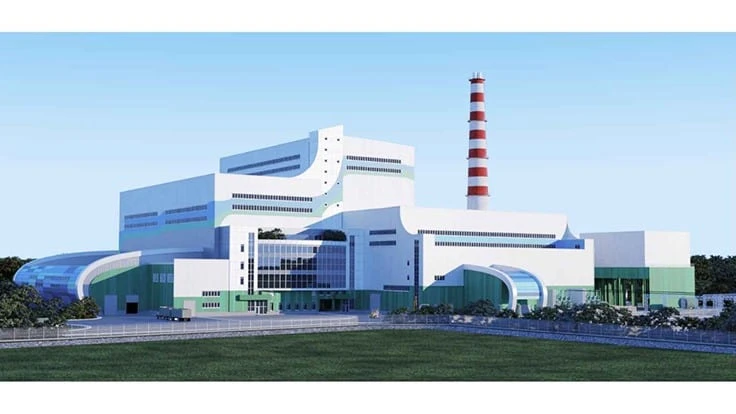
Image provided by Hitachi Zosen Inova (HZI).
Zurich, Switzerland-based Hitachi Zosen Inova (HZI) and Russian consortium partner ZiO-Podolsk have been commissioned to supply the technology for a new waste-to-energy (WTE) plant in the Moscow region.
According to HZI, the new plant will be able to process 700,000 metric tons of waste annually, converting it to generate 70 megawatts (MW) of electricity for the grid. It is the second HZI plant to be built by the consortium in the Moscow are on behalf of the Russia-based Alternative Generating Co. (AGC-1), a subsidiary of RT-Invest. Two additional plants could follow, according to HZI.
HZI and ZiO-Podolsk say the system will include HZI’s combustion and flue gas treatment systems and “numerous items of equipment in the balance of the plant, [including] various overarching services and monitoring processes.”
If all four planned WTE facilities are built, they will process a combined 2.8 million metric tons per year (700,000 tons each) of municipal and commercial waste from the Russian capital region. Additionally, each plant will be able to generate 70 MW of electricity, “enough for around 1.5 million inhabitants,” says HZI.
Says Andrei Shipelov, CEO of RT-Invest, “In Russia the industry is being created taking into account global best practices in sustainable development, where the priority is given to the full processing of waste into recycled materials and energy resources. Our primary goal is to achieve zero waste to landfills by 2025 in all territories where our company operates.”
Comments HZI CEO Bruno Frédéric-Baudouin, “The kind of modern energy-from-waste plants to be built under this partnership are efficient, environmentally friendly infrastructure projects that, thanks to highly developed technology, meet and often substantially exceed the most stringent emissions requirements. We’re proud that HZI’s technology will be playing such an important role in these projects in the Moscow area.”
Construction work on the site is scheduled to start in early summer of 2020, says HZI.