© Andrea Izzotti - istockphoto.com
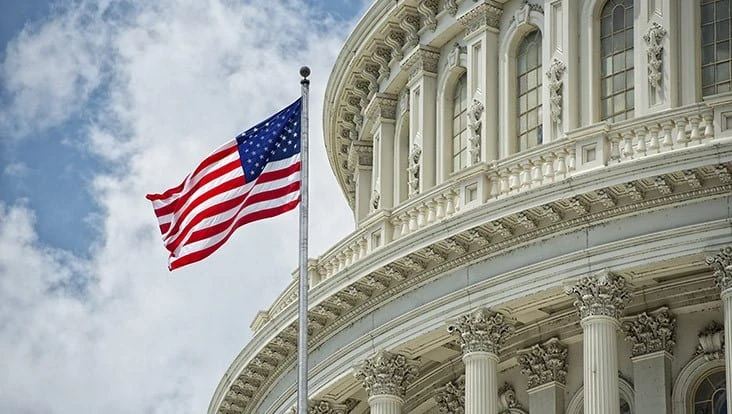
Several recycling industry stakeholders had the opportunity to testify during a hearing March 4 before the House Subcommittee on Environment and Climate Change of the Committee on Energy and Commerce to discuss solutions to challenges facing residential recycling streams.
“Recycling has long been an essential tool in our environmental protection toolbox,” said Frank Pallone Jr., Energy and Commerce Committee chairman, at the beginning of the hearing. “Unfortunately, it is clear from the plastic pollution in our oceans that our recycling system is simply not working. Plastic pollution is contaminating our air, our land and our water and contributing to the climate crisis. Recycling can play an important role in addressing climate change and reducing pollution in our communities while also boosting local economies. But we will only realize those benefits if we modernize an outdated system.
"At the same time, we cannot forget that ‘recycle’ is the third ‘R’ in ‘Reduce, Reuse, Recycle,’” he continued. “As we examine ways to address the plastic waste crisis, we must consider what happens to materials both before and after they reach the consumer. That means reducing the amount of waste we generate in the first place while also creating the right incentives to reuse recyclable materials. And we now understand the important role composting can play in reducing waste going to landfills and contaminants in our recycling stream. This is particularly important if we substitute compostable products for single-use plastics and other difficult-to-recycle items.”
At the hearing on “Reduce, Reuse, Recycle, Reform: Addressing America’s Plastic Waste Crisis,” recycling industry stakeholders were invited to speak as witnesses, including Jenna Jambeck, professor at the college of engineering at the University of Georgia, Athens, Georgia; Enrique Zaldivar, general manager of the Los Angeles Sanitation and Environment Bureau; Lynn Hoffman, co-president of Eureka Recycling, Minneapolis; Denise Patel, U.S. program director at the Global Alliance for Incinerator Alternatives, Berkeley, California; Keith Christman, managing director for plastics markets at the American Chemistry Council (ACC), Washington; and Bill Johnson, chief lobbyist at the Institute of Scrap Recycling Industries (ISRI), Washington.
Suggestions to the committee
Each witness offered the committee suggestions on ways to improve recycling in the U.S.
According to a news release from ISRI, Johnson identified existing pressure points in the residential recycling stream and provided a number of potential policy solutions in his testimony. He suggested several practical solutions and policies that could improve recycling in the U.S.:
- promoting ISRI’s Design for Recycling initiative;
- funding for recycling education;
- recycling-specific technical and financial assistance;
- affirmative government procurement policies that demand increased recycled content; and
- commitments to use recycled materials in state and local transportation and infrastructure projects.
“Successful recycling requires market demand,” Johnson said. “If there is no end market to utilize the recyclable materials that are collected, they will not be recycled and used again in manufacturing regardless of the volume of material collected. And collection without market consumption is not recycling.”
Johnson stated that valuable commodities are “sold and sought after in the global marketplace by industrial consumers,” which includes steel mills, foundries, paper mills and plastic formulators, to make new products. He said the Bureau of International Recycling (BIR), Brussels, estimates that more than 40 percent of manufacturers’ raw material needs around the world are met through recycling.
He added that successful recycling also requires minimal contamination. “Industry specifications developed by ISRI are derived from many sectors of the recycling industry including materials recovery facilities, metals, paper stock, plastics, glass and electronics industries and are constructed to represent the quality or composition of the materials bought and sold in the industry. These specifications are internationally accepted and are used throughout the world to trade the various commodities.”
Hoffman of Eureka Recycling provided the subcommittee with six lessons that her company has learned that might help them in making policies:
- develop better metrics to measure recycling success;
- better prioritize where recycling infrastructure investments are made;
- determine who pays for recycling;
- develop more standardized packaging for better sorting;
- explore new technology; and
- consider composting and other alternatives to recycling.
Christman of the ACC told the subcommittee that plastics producers are “deeply committed to ending plastic waste in the environment and have set goals to reuse, recycle or recover all plastic packaging in the United States by 2040 and to make all plastic packaging recyclable by 2030.
“We believe these challenges, while significant, are ultimately solvable,” Christman said, noting that recent disruptions have also led to significant domestic opportunities. “Over the last 18 months, we have seen more than $4.2 billion in new investments in mechanical and advanced plastics recycling with potential to convert 6 billion pounds of plastics into new products. These technologies offer significant economic and environmental potential.”
While not among those testifying, Tony Radoszewski, president and CEO of the Plastics Industry Association, Washington, released a statement in which he says that during the testimony, support was expressed for "restrictions, new taxes and bans of materials. But there was also support for our stand that not enough is being done to collect plastic waste and that there needs to be an increase in investment for recycling programs and also to promote more American innovation."
He adds that the RECOVER Act, bill H.R. 5115 would help to meet this need by providing federal grants to states and municipalities to invest in improving their recycling programs.
The full hearing can be watched here.
Latest from Waste Today
- Vecoplan to present modular solutions at IFAT 2026
- Terex Ecotec appoints Bradley Equipment as Texas distributor
- My Green Michigan expands depackaging capacity
- Washington selects Circular Action Alliance as PRO
- Ten-8 Industrial opens new central Florida service center
- Triumvirate Environmental acquires Environmental Waste Minimization
- Official NYC Bin availability expands ahead of deadline
- US Food Waste Pact’s 2025 Impact Report shows decrease in food waste