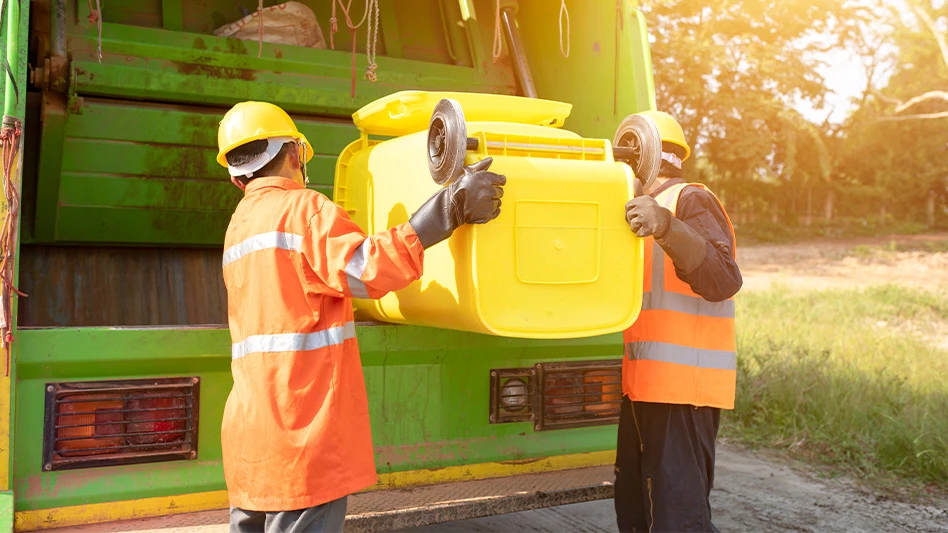
Jersey City, New Jersey, Mayor Steven Fulop announced July 13 that the city has invested in electric vehicles for its municipal fleet. These investments include waste trucks from China-based BYD and police vehicles, making its municipal fleet the first on the East Coast to feature fully electric garbage trucks and one of the first to utilize electric police response vehicles, Fulop says.
According to a city spokesperson, the waste vehicles will be delivered in roughly 4 to 6 months, and will be used to collect refuse from the city's litter baskets, parks and public facilities, with the potential for expanded use in the future. These vehicles are expected to be able to run for a week on a single charge.
These infrastructure advancements fall under the mayor’s executive order to require 10 percent of all new municipal fleet vehicles to be fully electric this year where available, with a goal of 100 percent of new municipal fleet vehicles to be fully electric by 2030.
“As an administration, we have sought out innovative and resourceful ways to build a foundation for a more resilient and sustainable future, which is critical now more than ever amid the current crisis,” Fulop says. “Transitioning to greener technology is a cost-saving, long-term investment benefiting our environment and our residents’ health. We’re leading the country in electrification, utilizing grants and community feedback to build an infrastructure that will serve as a model for others around the nation.”
“Mayor Fulop is turning Jersey City into a national leader when it comes to the environment and dealing with climate change. The mayor is putting the pedal to the medal in electrifying the city’s transportation fleet, including police cars and garbage trucks. In an area like Jersey City, cars and trucks are major sources of pollution. This will help everyone breathe easier while moving forward when it comes to cleaner transportation,” Jeff Tittel, director of the New Jersey Sierra Club, says. “Mayor Fulop has also committed to go 100 percent renewable and is moving the city forward with a climate action plan. He is an environmental leader and is now accelerating Jersey City into the future when it comes to clean transportation.”
The city has achieved the following sustainability benchmarks in the last year:
- All eight new vehicles purchased in 2020 have been fully electric, including five fully electric garbage trucks. These purchases were aided by a $2 million New Jersey Department of Environmental Protection (NJDEP) grant that the city was selected for out of 150 proposals
- Twenty-four electric vehicle charging stations have been installed for municipal and public use across the city, purchased through a $76,000 NJDEP grant
- Ten percent of the city’s current fleet has transitioned to fully electric vehicles
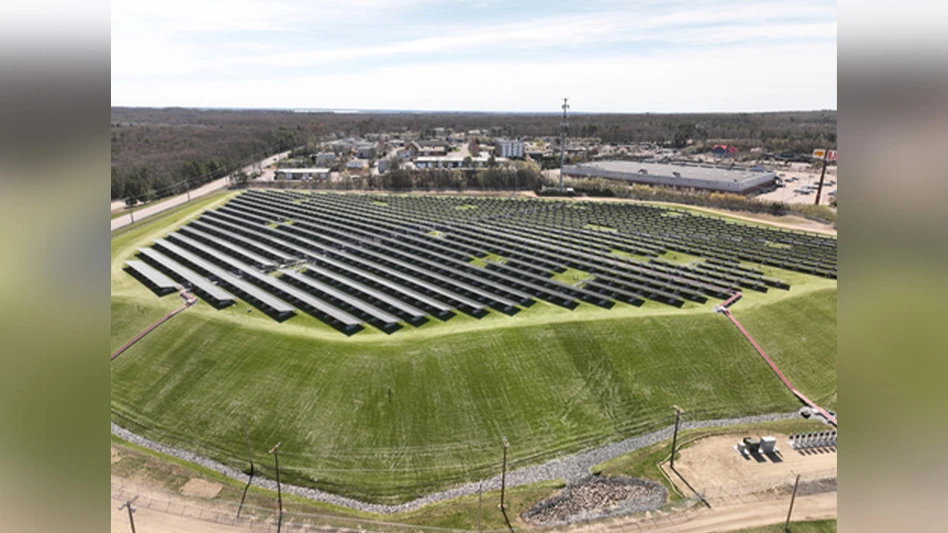
- New solar panels installed at the city’s department of public works will provide electricity to the building and electric vehicle charging stations
“While Jersey City has been awarded several NJDEP grants to subsidize much of the initial electrification costs and vehicle purchases, the significantly reduced energy and maintenance costs for electric vehicles will allow these investments to pay for themselves over the course of a few years,” Jersey City Business Administrator Brian Platt says. “The five electric garbage trucks will be among the first of its kind in the nation and even around the world and will replace eight of our highest polluting vehicles in the city. Reductions in harmful pollution and emissions, and also lower fleet operation costs, will greatly benefit our city for years to come.”
Latest from Waste Today
- Vermeer announces plan to build new facility in Des Moines metro area
- Buffalo Biodiesel shares updates on Part 360 application to DEC, Tonawanda facility progress
- Capstar Disposal expands roll off dumpster rental services
- Supreme Court strikes down IEEPA tariffs
- Casella details facility closures, expansion efforts
- Zero harm: Building a SIF prevention program for waste and recycling operations
- Casella posts a loss in Q4 2025
- McNeilus names Haaker Equipment first Dealer Partner of the Year