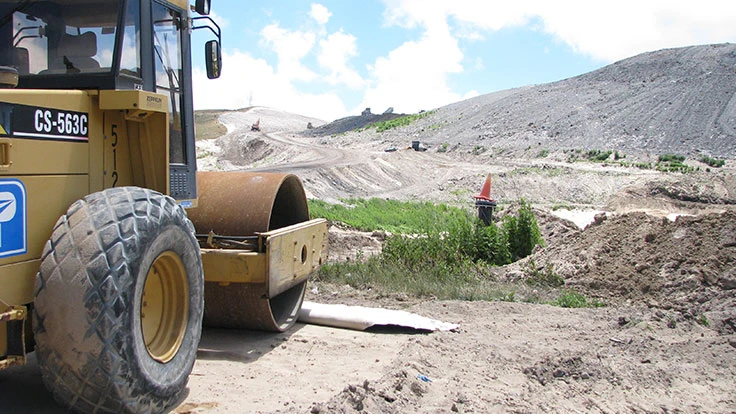
Despite their unpopularity with large segments of the public, landfill sites should be considered “one of the great untapped resources in the search for new enzymes for biotechnology,” say researchers from two universities in the United Kingdom.
A new research paper in the journal mSphere by biologists at Bangor and Liverpool universities in the U.K says they have worked to identify enzymes that degrade natural materials such as paper and clothing in landfill sites, and some of these could fuel more efficient biofuel production.
“There is a current impetus to search for new enzymes to improve biomass conversion processes,” says James McDonald of Bangor University, who led the research. “Our hypothesis is that, due to the volume of waste materials they hold, landfill sites represent a repository of unexplored biomass-degrading diversity. There is significant potential to identify new enzymes of ecological and biological significance.”
Cellulose and lignin occur naturally in plant-based materials and take longer to decompose than other waste products. Thus, the majority of landfill waste may consist of lignin and cellulose. In their plant form, they can be used as the basis for biofuel production, and identifying more effective enzymes for this process could improve the yield from this source.
Scientists have been searching for years for the most effective enzymes to break down the cellulose and lignin within the residual natural fibers. One place to search has been in the rumen of sheep and cows, who eat grasses, and the guts of also other plant eaters such as elephants and termites.
Landfill sites share many of the same characteristics as the digestive systems of these animals, say the researchers. They are dark, anoxic or un-oxygenated spaces, with a high content of cellulose. Thus, the group of scientists turned to landfills to find new plant-degrading enzymes.
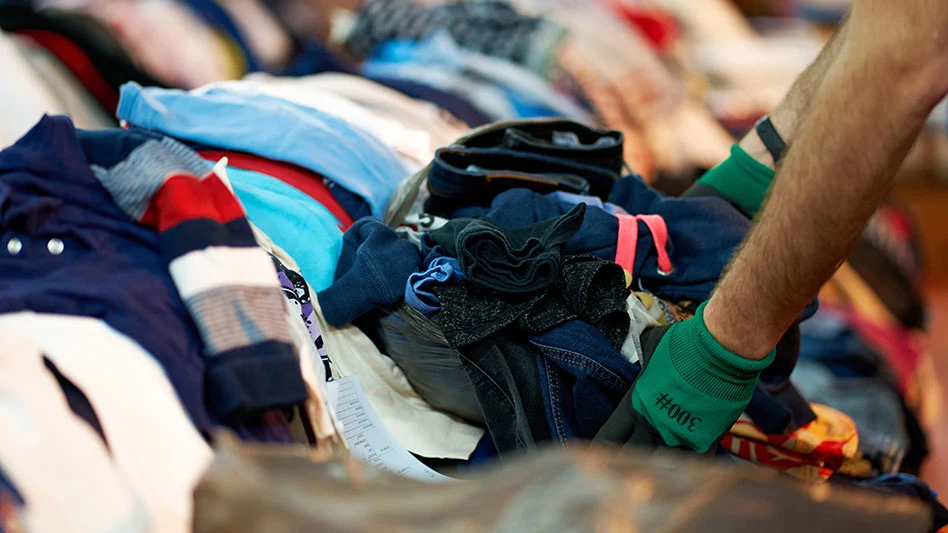
Within the paper, the authors describe how they used the liquid or leachate within landfill sites as a source of microbes to decompose cotton, and analyzed not only the families or taxa of bacteria, but also identified which bacteria produce groups of enzymes to degrade cellulose.
“Understanding exactly how the cellulose and lignin decompose, and the sources of the active enzymes in the process, will enable us to determine ways to improve the degradation of waste in landfill sites and potentially use this as a source for biofuel production,” says Emma Ransom-Jones, a postdoctoral researcher at Bangor University and lead author of the study.
Latest from Waste Today
- Vecoplan to present modular solutions at IFAT 2026
- Terex Ecotec appoints Bradley Equipment as Texas distributor
- My Green Michigan expands depackaging capacity
- Washington selects Circular Action Alliance as PRO
- Ten-8 Industrial opens new central Florida service center
- Triumvirate Environmental acquires Environmental Waste Minimization
- Official NYC Bin availability expands ahead of deadline
- US Food Waste Pact’s 2025 Impact Report shows decrease in food waste