Vadim - stock.adobe.com
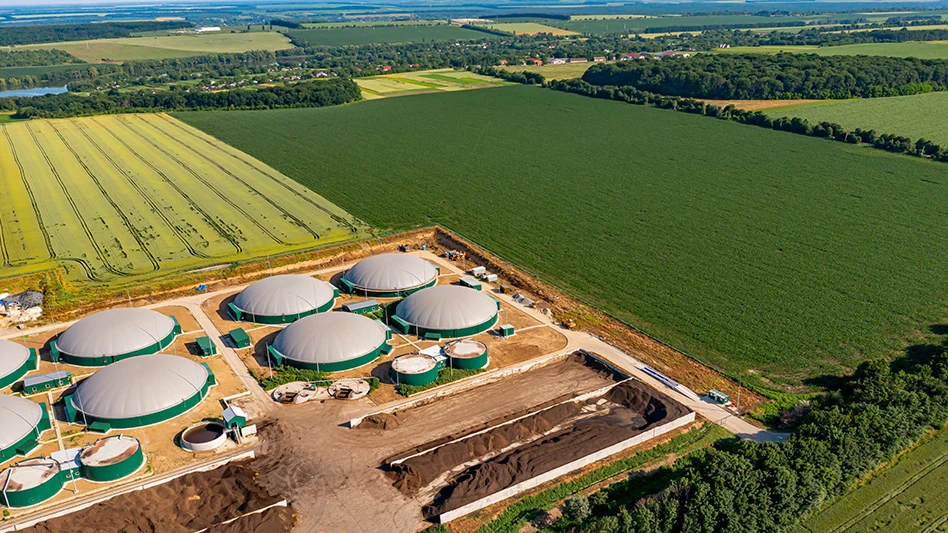
The Let Green Gas Count Coalition and American Biogas Council (ABC), Washington, have released a list of recommendations for corporate greenhouse gas reporting within the Greenhouse Gas Protocol (GHG-P). The recommendations aim to provide a comprehensive understanding of the full benefits of greenhouse gases, biogas and renewable natural gas (RNG).
The coalition urges GHG-P governing bodies to recognize market instruments in Scope 1 emissions reporting, enabling companies to account for the decision to use biogas and RNG in corporate decarbonization. Without GHG-P recommendations, corporate purchases of low- and negative-carbon gases to replace conventional natural gas face significant constraints, says the coalition, which is a campaign coordinated by the ABC, the Electrical Natural Gas Coalition, the World Biogas Association (WBA), the European Biogas Association, Eurogas, the Coalition for Renewable Natural Gas, Molecule Group and the Anaerobic Digestion and Bioresources Association.
“Biogas and renewable natural gas made from biogas are two of the lowest carbon-intensity energy sources available. It’s natural that businesses want to incorporate these green gases into their decarbonization strategy. But investment in projects that produce these fuels is currently thwarted by the lack of clear guidance on market instruments that recognize their carbon intensity,” says ABC Executive Director Patrick Serfass. “The recommendations from the Let Green Gas Count Coalition will help address this challenge to unlock new investment, accelerate project development and ensure renewable natural gas and biogas can be recognized for their full, science-based climate benefits. We can’t afford further delays.”
The recommendations will serve as interim guidance for treating renewable gases in corporate greenhouse gas reporting until 2028, when the GHG-P’s full guidance is expected to be released.
“The GHG Protocol’s lack of guidance on the use of market instruments has significantly slowed the growth of the biomethane industry, which prevents particularly harmful methane emissions from organic wastes and is one of the few options for decarbonizing hard-to-decarbonize sectors,” says Charlotte Morton, chief executive of WBA. “Both are critical to mitigate the current and worsening climate crisis. The Let Green Gas Count Coalition has been calling for a solution, and these high-level recommendations can provide interim guidance for the reporting of low carbon gases. We mustn’t waste any more time.”
The coalition is hosting a workshop on clean fuels accounting Sept. 24, on corporate GHG accounting and best practices for clean fuels.
Latest from Waste Today
- Vermeer announces plan to build new facility in Des Moines metro area
- Buffalo Biodiesel shares updates on Part 360 application to DEC, Tonawanda facility progress
- Capstar Disposal expands roll off dumpster rental services
- Supreme Court strikes down IEEPA tariffs
- Casella details facility closures, expansion efforts
- Zero harm: Building a SIF prevention program for waste and recycling operations
- Casella posts a loss in Q4 2025
- McNeilus names Haaker Equipment first Dealer Partner of the Year