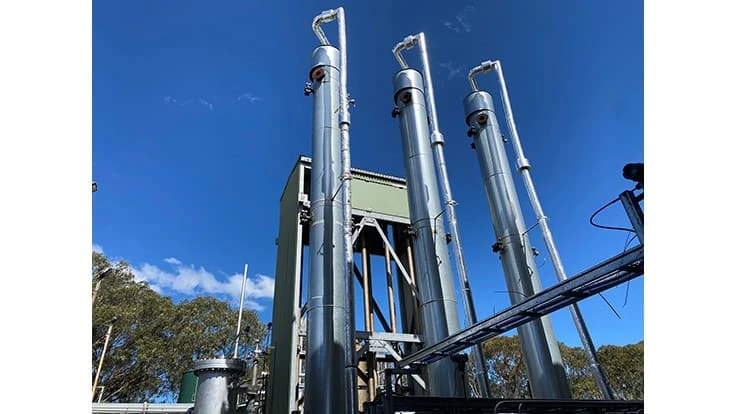
Photo provided by Licella.
Sydney-based technology provider Licella has produced a report it says highlights the potential for establishing a chemical recycling facility in Australia to focus on difficult to mechanically recycle plastic scrap such as food packaging. Licella says it has backing for the project from global packaging and polymers producers such as Amcor, Coles, iQ Renew, LyondellBasell and Nestlé.
“Advanced recycling allows soft plastic waste, like confectionery wrappers and bread bags, to be turned back into oil, then made into new food-grade packaging in Australia,” says Licella. The company says its study found that putting the oil created from discarded plastic back into the local plastic packaging supply chain “delivers a 64 percent CO2 reduction compared to crude oil.”
The study identified Altona in the Australian state of Victoria as the location best placed for an advanced recycling facility, “given the area's existing infrastructure and manufacturing capabilities,” according to Licella.
“It is an opportunity to establish Victoria, and Australia, as a leader in this emerging new industry,” states Licella, which has developed a catalytic hydrothermal reactor (Cat-HTR) it calls “the world's most commercially advanced hydrothermal liquefaction (HTL) technology,” with HTL being “the ‘next generation’ of advanced recycling equipment,” according to Licella.
Licella says creating a circular economy for plastic is essential for Australia to meet its National Waste Policy commitments. Australia's National Packaging Targets require industry to use an average of 50 percent recycled content in packaging by 2025, meaning “demand for recycled content, especially food-grade plastic, is expected to grow significantly,” says the technology provider.
The advanced recycling facility presents the opportunity to divert up to 120,000 metric tons (or nearly 25 percent) of the plastics sent to landfill every year in Victoria alone, says the firm. If the proposed facility processed 20,000 metric tons per annually, it would produce 17,000 metric tons of oil per year “that could be used in the local plastic supply chain.”
Adds Licella, “The system-wide transformation required for Australia to meet its plastic recycling targets needs local initiatives, such as those outlined in this report, to come to fruition. Collaboration across industry and government is essential to drive this change.”
The full report is available online on the Licella website.
Latest from Waste Today
- Vermeer announces plan to build new facility in Des Moines metro area
- Buffalo Biodiesel shares updates on Part 360 application to DEC, Tonawanda facility progress
- Capstar Disposal expands roll off dumpster rental services
- Supreme Court strikes down IEEPA tariffs
- Casella details facility closures, expansion efforts
- Zero harm: Building a SIF prevention program for waste and recycling operations
- Casella posts a loss in Q4 2025
- McNeilus names Haaker Equipment first Dealer Partner of the Year