Recycling Today archives
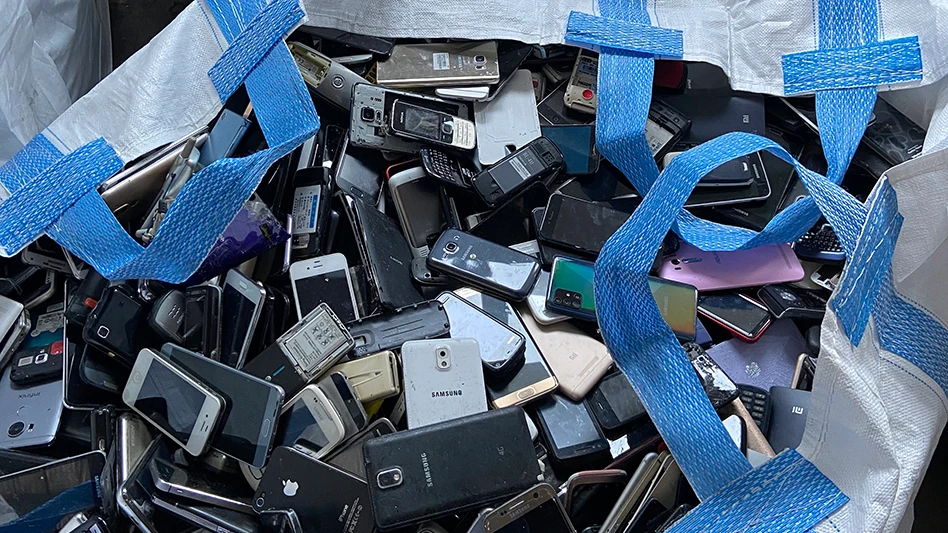
The U.S. Environmental Protection Agency (EPA) has issued a clarification to handlers of lithium-ion batteries that both larger batteries and aggregated collections of batteries are subject to a material safety data sheet (MSDS) reporting requirement.
In a May report, the agency says the only exemptions to the reporting requirement involve lithium-ion batteries used for personal, family or household purposes or a battery that is present in the same form and concentration as a product packaged for distribution and use by the general public.
The EPA indicates that larger lithium-ion batteries, such as those found in electric vehicles, require MSDS reporting. “This exemption would not apply to any large commercial type batteries that are not available for purchase or use by the general public,” the agency says.
The notice from the EPA does not specifically refer to recycling operations, instead saying the reporting requirements under the Emergency Planning and Community Right-to-Know Act (EPCRA) “apply to owners and operators of facilities that are required to prepare or have a MSDS for any hazardous chemical as defined under the Occupational Safety and Health Act (OSHA) or its Hazardous Communication Standards (HCS).”
In its brief notice, the EPA also makes a comparison to lead-acid batteries, writing, “OSHA has determined, similar to lead-acid batteries, that lithium-ion batteries are not considered ‘articles’ and are subject to the OSHA HCS regulations.”
“Although these batteries are sealed, they have the potential to leak, spill or break during normal conditions of use and in foreseeable emergencies causing exposure to chemicals," the EPA continues. "Thus, since owners/operators of facilities are required to prepare or have an MSDS for lithium-ion batteries, they must complete MSDS Reporting and Tier II Reporting if the applicable reporting thresholds in 40 CFR Part 370.10 are met or exceeded.”
A portrayal of those thresholds can be found here.
Latest from Waste Today
- TXP Environmental acquires Texas landfill
- Landfill methane measurement: From models to direct observation
- Aduro selects Netherlands as site for industrial scale-up facility
- CDRA Conference & Tradeshow 2026: CDRA honors annual award recipients
- WM reports revenue, earnings growth in Q4 and full-year 2025
- Reclamation Technologies USA acquired by investment fund
- Stadler equips Spanish MRF
- Amlon adds Mastermelt facility to its portfolio