As part of ongoing efforts to reduce waste and improve recycling in Long Beach, California, the city’s Department of Public Works Environmental Services Bureau (ESB) has launched its first Commercial Food Scraps Collection Program.
The pilot program, developed as a collaborative effort with local businesses, will divert food scraps from the waste stream and create renewable energy, reduce food waste and prevent potent greenhouse gas emissions.
“The launch of the Commercial Food Scraps Collection program marks a major step towards reducing Long Beach’s overall greenhouse gas emissions,” said Mayor Robert Garcia. “We are proud to partner with our local businesses to help achieve the city’s sustainability goals.”
The ESB is partnering with 115 select local businesses, identified by the city as high generators of organic materials, to institute a food scraps collection process at their establishment. Businesses will each initially receive a 95-gallon green cart to dispose of and collect food scraps.
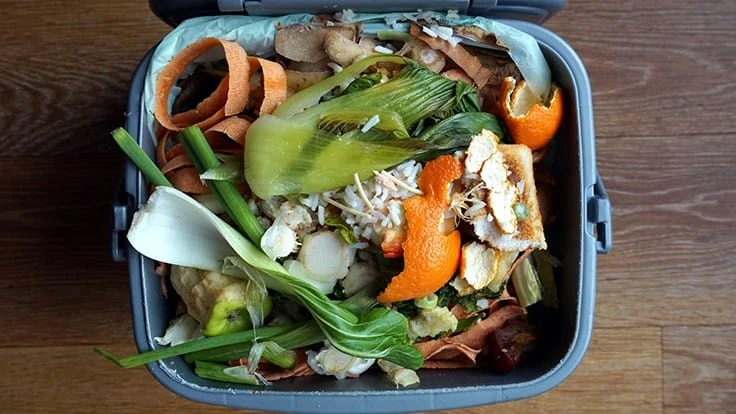
Acceptable items for collection include leftover food-based materials such as all meat, dairy, bread, vegetables, fruits, eggs and shells, coffee grounds, cheese, pasta and any food scrap. All non-food-based materials such as trash, recyclables and hazardous waste must be disposed of separately.
The Department of Public Works will pick up the food scraps for delivery to the Puente Hills Materials Recovery Facility (MRF) for processing. Once at the MRF, the resulting slurry will be treated, pumped into tanks and shipped to a wastewater treatment plant managed by the Los Angeles County Sanitation District. There, the slurry will be converted into renewable energy through anaerobic digestion.
In addition to managing the distribution and collection of the green collection bins, the city will provide businesses with routine site visits, training materials and signage, available in multiple languages, to help ensure businesses set up a successful food scraps collection program.
“We’re grateful for this collaboration with the businesses, who are instrumental in diverting food scraps from the waste stream,” said Public Works Deputy Director and Environmental Services Bureau Manager Dikran Melkonian. “We are very excited to launch this program that has been years in the making.”
The Department of Public Works initiated this pilot program to support local businesses required to divert organic waste in accordance with current state guidelines.
California Assembly Bill 1826 mandates all commercial businesses divert organic waste and is further enforced in State Senate Bill 1383, which establishes statewide targets to achieve a 75 percent reduction of organic waste and recover at least 20 percent of edible food for human consumption by 2025.
Latest from Waste Today
- Republic Services spends big on acquisitions, reports growth for 2025
- Arcadis, CCI BioEnergy partner under Master Service Agreement
- SWANA, Fire Rover develop fire incident reporting tool
- Anaergia, Eni and CREvolution forge renewable fuels partnership
- Iron Crest forms waste equipment manufacturing platform
- SES opens second zero-waste facility in Kansas City
- Vanguard Renewables acquires E-Z Recycling
- Cemex Ventures increases investment in waste-to-energy startup