The
Los Angeles County Sanitation Districts, which is an organization consisting of
23 independent districts serving over 5.7 million people in 78 cities and
unincorporated territory within Los Angeles County, announced Dec. 1 that it
has started up a biogas purification system to recycle food waste into
renewable vehicle fuel.
This food
waste includes dinner scraps and spoiled fruit and vegetables from commercial
businesses including grocery stores and restaurants.
"We've
been converting food waste into electricity for over six years. With this new
biogas purification system, we now also produce renewable natural gas that is
used to fuel vehicles like cars, buses and trucks. We know that many cities are
grappling with how to meet state requirements for recycling food waste and are
pleased to offer a complete and cost-effective solution," Robert Ferrante, chief engineer and general manager
for the Los Angeles County Sanitation Districts, says.
The districts'
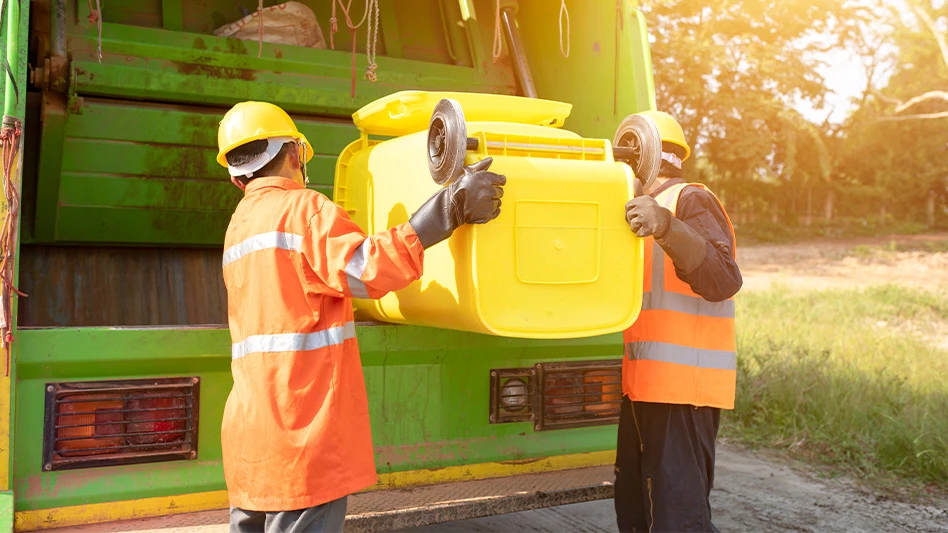
food waste recycling program consists of several parts. Waste haulers collect
food waste that has been placed in separate bins by their customers. The loads
of food waste are delivered to the districts' Puente Hills Materials Recovery
Facility in Whittier, California. At the Whittier facility, the food
waste is loaded into specialized equipment that removes contaminants like
plastic bags and food utensils and blends the food waste into a slurry.
The county
then transports the slurry to its wastewater treatment plant in Carson,
California. Waste haulers that have their own processing equipment can also
deliver slurry to the Carson plant.
The slurry is added to the plant's digesters, which are large, sealed tanks
where microorganisms convert food waste and wastewater solids into
biogas.
The biogas
is used in two ways. Some is sent to the districts' power plant located at the Carson facility
where the biogas is converted to electricity that runs the treatment plant. The
remaining biogas is sent to the new purification system to make fuel-grade
renewable natural gas. The purification system is capable of producing the
renewable natural gas equivalent of 2,000 gallons of gasoline per day. The
renewable natural gas is dispensed at the Los Angeles County Sanitation
Districts’ nearby fueling station that is open to the public.
"Because
the [Los Angeles County Sanitation Districts] manage both solid waste and
wastewater, we already had most of the infrastructure needed for food waste
recycling. We also received a grant from the California Energy Commission that
helped fund the new biogas purification facility. As a result, we were able to
complete our system relatively inexpensively and pass those savings onto our
customers," Bob Asgian, head of the Los
Angeles County Sanitation Districts’ Solid Waste Management Department, says. "Use
of our system has been steadily growing, and we have additional available
capacity to help more cities."
Latest from Waste Today
- Vermeer announces plan to build new facility in Des Moines metro area
- Buffalo Biodiesel shares updates on Part 360 application to DEC, Tonawanda facility progress
- Capstar Disposal expands roll off dumpster rental services
- Supreme Court strikes down IEEPA tariffs
- Casella details facility closures, expansion efforts
- Zero harm: Building a SIF prevention program for waste and recycling operations
- Casella posts a loss in Q4 2025
- McNeilus names Haaker Equipment first Dealer Partner of the Year