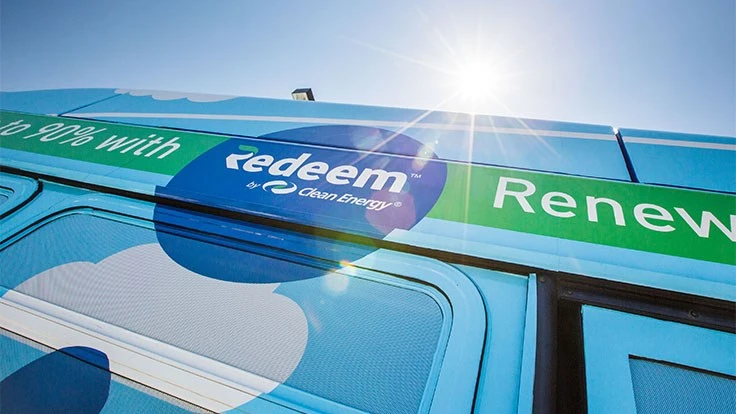
The fueling contract begins with a one-year pilot where Clean Energy will provide Redeem to one of Metro’s eleven compressed natural gas stations, which are currently operated and maintained by Clean Energy. Each station provides fuel for approximately 200 CNG buses. Execution of an additional option will allow Clean Energy to provide Redeem to the entire fleet of 2,200 natural gas buses for four more years, for an anticipated 38 million gasoline gallon equivalents (GGEs) each year.
Over the five-year period, the transition to RNG will reduce Metro’s greenhouse gas (GHG) emissions by over 520,000 metric tons over the use of regular natural gas and by almost 900,000 metric tons over the use of diesel. Unrelated to the use of Redeem, Metro will begin retrofitting and replacing their buses with the new Cummins-Westport Low NOx CNG engines that reduce smog-forming NOx and GHG emissions that are 90 percent lower than the EPA NOx limit.
“As one of the largest transit agencies in the nation, we take our responsibility to the environment and the taxpayers very seriously,” says Cris B. Liban, Metro Executive Officer for Environment and Sustainability. “The use of RNG allows us to further exceed our environmental goals and reduce our reliance on the use of extracted fossil fuels, while ensuring the seamless transition to a cleaner, greener fleet.”
Redeem is derived from biogenic methane or biogas, which is methane that is naturally generated by the decomposition of organic waste. The methane gas is then processed, purified and sent into the interstate natural gas pipeline and transported to Clean Energy’s and its customers’ stations.
“We are continuously assessing new technologies in transportation and perform a rigorous analysis before adopting anything,” said John Drayton, Metro Director of Vehicle Technology. “In this case, transitioning to renewable natural gas along with the use of low NOx engines reduces our fleet’s NOx emissions by 90 percent, so it was an easy decision.”
“Metro is putting the needs of its customers and the people of Los Angeles County at the forefront in its decision to switch to Redeem and the latest clean engine technology,” said Tyler Henn, vice president and general manager of Clean Energy Renewables. “They have chosen an alternative that will make significant strides in cleaning up the air and reducing harmful air toxins and greenhouse gases at an affordable price.”
The Los Angeles County Metropolitan Transportation Authority (Metro) is unique among the nation’s transportation agencies. Created in 1993, Metro is a multimodal transportation agency that transports about 1.3 million passengers daily on a fleet of 2,200 clean air buses and six rail lines. The agency also oversees bus, rail, highway and other mobility-related building projects and leads transportation planning and programming for Los Angeles County.
Latest from Waste Today
- Vermeer announces plan to build new facility in Des Moines metro area
- Buffalo Biodiesel shares updates on Part 360 application to DEC, Tonawanda facility progress
- Capstar Disposal expands roll off dumpster rental services
- Supreme Court strikes down IEEPA tariffs
- Casella details facility closures, expansion efforts
- Zero harm: Building a SIF prevention program for waste and recycling operations
- Casella posts a loss in Q4 2025
- McNeilus names Haaker Equipment first Dealer Partner of the Year