Plans to place a solar array atop a closed Portland, Maine, landfill is causing city officials to consider its postclosure management, a report by the Portland Press-Herald says. The Ocean Avenue landfill has allegedly not been maintained over several years.
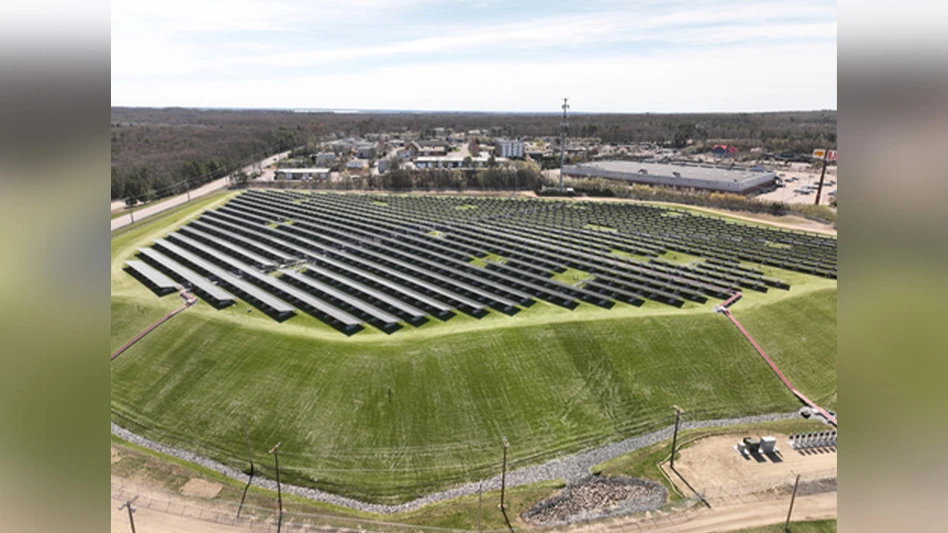
City officials want to put a 4-acre solar array with more than 2,800 solar panels on the closed landfill site by the end of the year, but the landfill cover has been eroded and compromised, the report says. There are also no vents at the landfill site to address the methane gas building underneath the cover.
The landfill is currently rimmed by walking trails maintained by Portland Trails and is located near a dog park where visitors frequently allow their pets to run without a leash. Many parts of the area are mounds where potentially contaminated water seep out of the landfill. According to the report, the Maine Department of Environmental Protection (MDEP) says leachate is being forced out of the landfill by water that is collected at the top. Portland’s landfill is mostly flat, but MDEP official say it should be rounded for water runoff.
The leachate has been deemed unhealthy for pets by the MDEP but not for humans.
The Ocean Avenue landfill closed in the late 1970s but wasn’t officially capped until the 1990s, the report says. MDEP says it was grandfathered in and needed only to comply with regulations that were in effect from the 1970s. A 1996 summary of the landfill says it was capped with 24 inches of material, including sludge from the Portland Wastewater Treatment Plant. Residents have also been illegally dumping materials, such as construction and demolition (C&D) debris and bulky waste, at the Ocean Avenue landfill.
In May 2009, the state required the city to conduct surface water tests because the area was being used for recreation more often, the report says. In August 2009, the tests revealed high levels of lead, arsenic, chromium, iron, manganese and more contaminations at one of the locations. MDEP decided the water was dangerous for mammals to drink.
Because surrounding homes used public water, MDEP said there was no significant public health threat from the landfill’s presence except when an animal would drink the water near the walking trail. MDEP recommended putting up a fence and signs warning residents of the water, but the city never complied.
It wasn’t until November 2010 that MDEP told the city that it needed to address postclosure maintenance on the Ocean Avenue landfill or the department would take action to ensure compliance.
In May 2015, MDEP conducted a site visit, which prompted the department to ask the city to repair fencing surrounding the area and fix erosion issues. In 2016, another letter was sent to the city in 2016 by MDEP to address the ponding at the top of the landfill that caused seepage by regrading the site.
In June 2017, the city presented formal plans to the Planning Board to address the maintenance issues. The project will cost at least $150,000 to increase the height of the landfill by 3 feet, the report says. The project does not include the seven vents needed to mitigate methane gas buildup.
According to the report, if the solar array has to be taken offline or removed because of issues with the landfill, the city would be liable for the costs of any electricity that would have been produced.
City officials want to put a 4-acre solar array with more than 2,800 solar panels on the closed landfill site by the end of the year, but the landfill cover has been eroded and compromised, the report says. There are also no vents at the landfill site to address the methane gas building underneath the cover.
The landfill is currently rimmed by walking trails maintained by Portland Trails and is located near a dog park where visitors frequently allow their pets to run without a leash. Many parts of the area are mounds where potentially contaminated water seep out of the landfill. According to the report, the Maine Department of Environmental Protection (MDEP) says leachate is being forced out of the landfill by water that is collected at the top. Portland’s landfill is mostly flat, but MDEP official say it should be rounded for water runoff.
The leachate has been deemed unhealthy for pets by the MDEP but not for humans.
The Ocean Avenue landfill closed in the late 1970s but wasn’t officially capped until the 1990s, the report says. MDEP says it was grandfathered in and needed only to comply with regulations that were in effect from the 1970s. A 1996 summary of the landfill says it was capped with 24 inches of material, including sludge from the Portland Wastewater Treatment Plant. Residents have also been illegally dumping materials, such as construction and demolition (C&D) debris and bulky waste, at the Ocean Avenue landfill.
In May 2009, the state required the city to conduct surface water tests because the area was being used for recreation more often, the report says. In August 2009, the tests revealed high levels of lead, arsenic, chromium, iron, manganese and more contaminations at one of the locations. MDEP decided the water was dangerous for mammals to drink.
Because surrounding homes used public water, MDEP said there was no significant public health threat from the landfill’s presence except when an animal would drink the water near the walking trail. MDEP recommended putting up a fence and signs warning residents of the water, but the city never complied.
It wasn’t until November 2010 that MDEP told the city that it needed to address postclosure maintenance on the Ocean Avenue landfill or the department would take action to ensure compliance.
In May 2015, MDEP conducted a site visit, which prompted the department to ask the city to repair fencing surrounding the area and fix erosion issues. In 2016, another letter was sent to the city in 2016 by MDEP to address the ponding at the top of the landfill that caused seepage by regrading the site.
In June 2017, the city presented formal plans to the Planning Board to address the maintenance issues. The project will cost at least $150,000 to increase the height of the landfill by 3 feet, the report says. The project does not include the seven vents needed to mitigate methane gas buildup.
According to the report, if the solar array has to be taken offline or removed because of issues with the landfill, the city would be liable for the costs of any electricity that would have been produced.
Latest from Waste Today
- Vermeer announces plan to build new facility in Des Moines metro area
- Buffalo Biodiesel shares updates on Part 360 application to DEC, Tonawanda facility progress
- Capstar Disposal expands roll off dumpster rental services
- Supreme Court strikes down IEEPA tariffs
- Casella details facility closures, expansion efforts
- Zero harm: Building a SIF prevention program for waste and recycling operations
- Casella posts a loss in Q4 2025
- McNeilus names Haaker Equipment first Dealer Partner of the Year