Dreamstime
Two recycling facilities in North Carolina and Texas are recipients of the Can Manufacturers Institute's (CMI) Aluminum Beverage Can Capture Grant. The grant aims to improve how material recovery facilities (MRF) collect and sort aluminum cans.
Curbside Management of Asheville, North Carolina, and Independent Texas Recyclers (ITR) of Houston, will use the money to install equipment to capture 540 tons of aluminum cans that were previously missorted, CMI says.
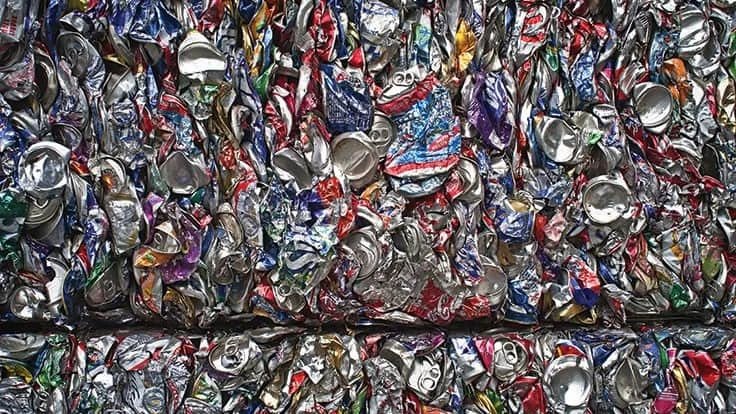
The grant program builds off the CMI research released last year that found it is critical to capture all used beverage cans (UBC) flowing through MRFs. This research concluded that most MRFs in the United States wouldn't operate without the revenue from UBCs. CMI says this is because they are consistently the most valuable beverage package material in the recycling stream.
“It is important for the health of our nation’s recycling system to capture every aluminum beverage can for recycling,” CMI president Robert Budway says. “Aluminum beverage cans provide 33 percent of the revenue to MRFs in nondeposit states, which is more than any other residential recyclable. .Capturing missorted cans at the MRF is a cost-effective way to capture the valuable aluminum from cans. The return on investment of capturing incremental used can volumes is so high that additional equipment MRFs install will pay for itself in a short period.”
Both recipients of the grants operate single-stream MRFs that are undergoing construction projects to improve their capabilities. Curbside Management is replacing its existing eddy current with one that can more effectively sort aluminum packaging. ITR will put the funding toward installing a second eddy current to capture UBCs from the containers in the residue (i.e., material destined for landfill) line.
Capturing and recycling these more than 36 million aluminum cans each year is expected to have a significant environmental and economic impact. When sold, these cans will generate more than $500,000 in revenue for MRFs, the CMI says.

When these cans are recycled, it will save more than 15 million kilowatt-hours of energy and will avoid more than 3.5 million kilograms of carbon dioxide equivalent emissions. That corresponds to saving enough energy for each person in the United States to watch a 40-inch LED TV for one hour and to avoiding emissions from driving an average car nearly 9 million miles, which is more than 350 times around the Earth, the CMI says.
ITR and Curbside Management are just the first two recipients of the program, announced last year. CMI says it expects additional grantees to be announced midyear.
The Recycling Partnership, an organization based in Falls Church, Virginia, that is dedicated to funding initiatives to improve recycling and sustainability in the community, picked the recipients of the grant and will provide technical assistance. Since 2014, the nonprofit says it helped divert 230 million pounds of new recyclables from landfills, saved 465 million gallons of water and avoided more than 250,000 metric tons of greenhouse gases.
The CMI is the national trade association of the metal can manufacturing industry and its suppliers in the United States.
The can industry accounts for the annual domestic production of about 130.7 billion food, beverage and general line cans. The industry employs more than 28,000 people with plants in 33 states, Puerto Rico and American Samoa; and generates about $15.7 billion in direct economic activity.
Latest from Waste Today
- Vermeer announces plan to build new facility in Des Moines metro area
- Buffalo Biodiesel shares updates on Part 360 application to DEC, Tonawanda facility progress
- Capstar Disposal expands roll off dumpster rental services
- Supreme Court strikes down IEEPA tariffs
- Casella details facility closures, expansion efforts
- Zero harm: Building a SIF prevention program for waste and recycling operations
- Casella posts a loss in Q4 2025
- McNeilus names Haaker Equipment first Dealer Partner of the Year