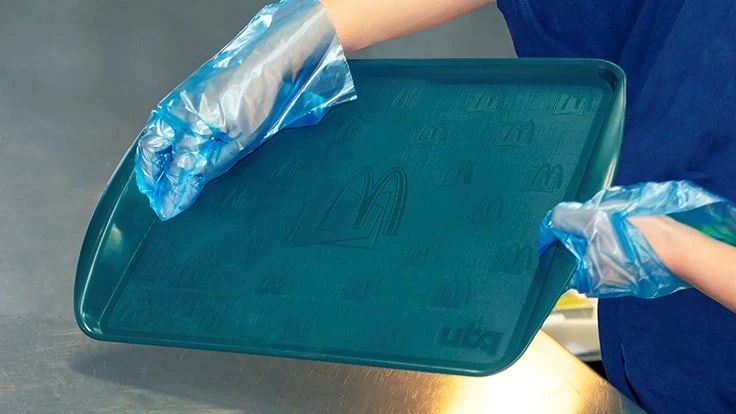
Arcos Dorados Holdings Inc., Latin America’s largest restaurant chain and the world’s largest independent McDonald's franchisee, announced Jan. 25 that it will substitute the plastic trays currently used by its customers with trays made from a thermoplastic composed from household waste.
Since implementing its plastics reduction program in 2018, the Uruguay-based company says over 1.3 tons of single-use plastic have been removed from its operation.
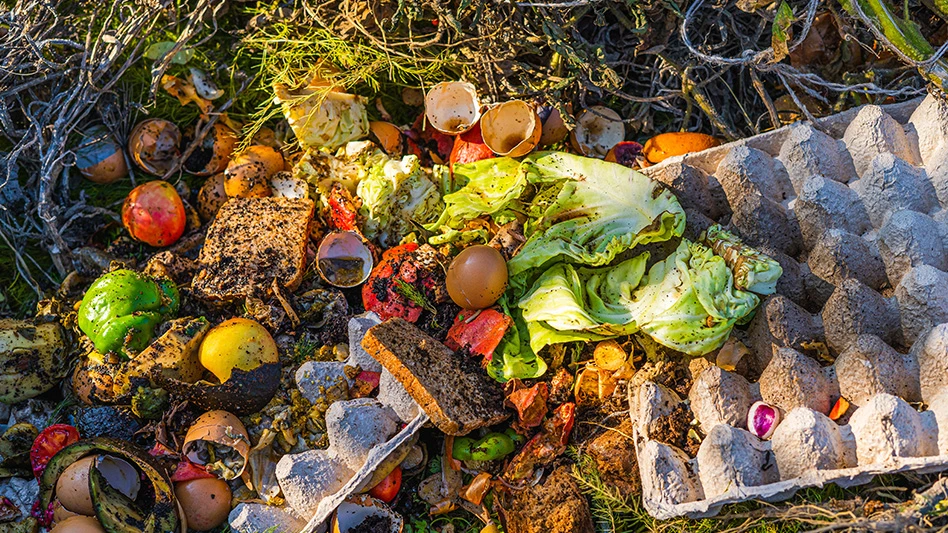
The new trays represent the first step in the partnership between Arcos Dorados and UBQ Materials Ltd. (UBQ), an Israeli company that has patented a technology that converts household waste into a biobased thermoplastic. Through this process, UBQ receives waste destined for landfills, including food leftovers, paper, cardboard and mixed plastics. This mixed material is converted into a single-composite thermoplastic material compatible with industry machinery and manufacturing standards.
In the first phase of the partnership, 7,200 serving trays made with UBQ will be introduced in 30 McDonald's restaurants in 20 Brazilian state capitals, replacing old plastic trays. The initiative will be gradually extended to all McDonald’s restaurants throughout the country, with 11,000 additional trays already in production. Aside from the UBQ logo, McDonald’s guests will see and feel no difference in the serving tray, the company says.
“As a company, we are fully committed to reducing the environmental impact of our operation as part of our ‘Recipe for the Future’ ESG platform. The partnership with UBQ is yet another step toward introducing increasingly innovative solutions to improve the world around us, and we are proud to take this next step, supporting a technology that will transform the way society recycles its organic waste,” Gabriel Serber, director of social impact and sustainable development at Arcos Dorados, says.
The new trays are produced by the Brazilian company Semaza Comércio de Plástico Ltda., in its plant in Santana de Parnaíba, in the Greater São Paulo region. The introduction of trays made with UBQ will be gradually extended to additional restaurants in the company’s footprint, and the old plastic trays will be reused in other circular economy projects promoted by Arcos Dorados.
Latest from Waste Today
- Interchange 360 to operate alternative collection program under Washington’s RRA
- Waste Pro files brief supporting pause of FMCSA CDL eligibility rule
- New Way Trucks expands US network with Joe Johnson Equipment
- Tire Industry Project publishes end-of-life tire management guide
- Vecoplan to present modular solutions at IFAT 2026
- Terex Ecotec appoints Bradley Equipment as Texas distributor
- My Green Michigan expands depackaging capacity
- Washington selects Circular Action Alliance as PRO