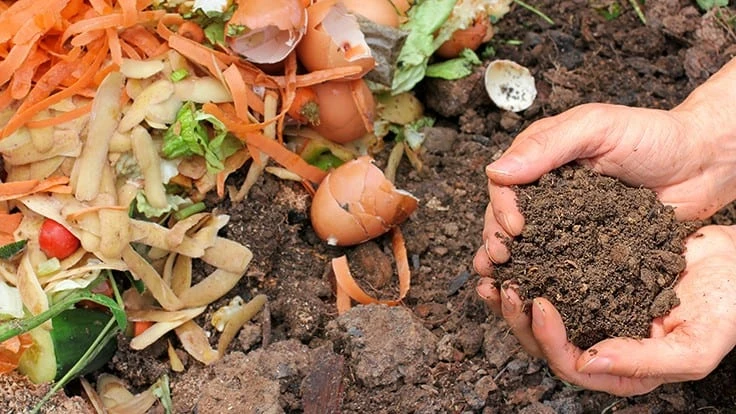
Napa Recycling and Waste Services (NRWS) in Napa, California, has been recognized with the 2021 Dave Hardy Leadership in Organics Award by the California Resource Recovery Association (CRRA) for achievements in reusing materials, preventing waste and composting.
The city of Napa and NRWS have invested millions of dollars into composting over roughly the past decade, including upgrades that allowed the organization to expand a composting collection program in 2015 to include food and paper scraps.
According to a city press release, the upgrade resulted in roughly 10 percent less residential trash being sent to the landfill and 22,000 more tons of waste being composted.
“We have a little over 250 businesses and schools on the full composting program. And, I’ve added up real quick, between residential and commercial, we’ve diverted an extra 20,000-plus tons of organics that we would not have if we didn’t have those full programs in the past six-and-a-half years,” said Kevin Miller, who directs city recycling programs. “So that’s a big difference, it makes a big difference to our environment and our community.”
As reported by the Napa Valley Register, NRWS and Napa have directly invested into the facility since 2014. Those include a $2.3 million organics receiving building; a $2.8 million organics pre-processing system; a $3 million stormwater management system; a grant-funded $440,000 organics “depackager,” and an $11 million “covered aerated static pile covered composting system.”
The composting system has reduced overall air emissions of the facility by over 90 percent. since becoming operational in January 2020.
“We’ve been doing it for six-and-a-half years with a fully permitted facility, so we feel like we’re very prepared, ahead of the curve and, quite frankly, we’ve swallowed a lot of the costs already,” Miller said. “Our rate payers have borne that burden, and previous councils have approved the necessary investments, so we are where we want to be. “
Tracie Onstad Bills, executive director of the CRRA, said that the facility is set up to process 63,000 tons of food scraps, yard trimmings and other organics into locally-used compost each year. She also said the facility is a shining example of a public-private partnership used to meet the goals established by Senate Bill 1383, which required a 50 percent reduction in organic waste disposal from 2014 levels by 2020 and requires a 75 percent reduction by 2025.
Tim Dewey-Mattia, public education manager at NRWS, said the organization really appreciated working with the city on the project and encouraged anyone who hasn’t seen the new facility to come out on a tour. He said the facility will be having an open house, tentatively scheduled for Oct. 16.
Dewey-Mattia added that, despite the great facility, everyone’s going to need to work together to divert organic waste.
“We have a great facility, we’re ahead of the game there, but we’re all going to have to work together in the next few years to kind of do better at diverting organic waste,” Dewey-Mattia said. “I think we have a good foundation and so we’re excited to take that challenge on with the city.”
Latest from Waste Today
- My Green Michigan expands depackaging capacity
- Washington selects Circular Action Alliance as PRO
- Ten-8 Industrial opens new central Florida service center
- Triumvirate Environmental acquires Environmental Waste Minimization
- Official NYC Bin availability expands ahead of deadline
- US Food Waste Pact’s 2025 Impact Report shows decrease in food waste
- Coastal Waste & Recycling expands recycling operations with Machinex
- Reconomy acquires German-based GfAW