New Planet Energy Development LLC, Springfield, Illinois, announced it has secured a location and permits for construction of a modern waste processing facility in St. Louis that will recover, reuse and divert more than 80 percent of residential trash from landfills.
“We have our location and all of our permits and are ready to begin construction once we secure the waste contracts from local municipalities,” New Planet CEO Ryan Bird says. “We are eager to bring this much-needed green solution and all of its benefits to the residents of the St. Louis region.”
New Planet’s process involves sorting recyclables for maximum recovery of materials and creating a U.S. government-approved alternative fuel from residential trash. Their resulting product, called Solid Recovered Fuel (SRF), will serve as a renewable energy source in local industrial plants. According to the company, this will help St. Louis, where currently 75 percent of recyclables end up in landfills each year, find a better solution for its waste.
“This is an enormous win for the environment and for the St. Louis region. The solution we propose will simplify the collection process for residents and haulers, drastically reduce harmful greenhouse gas emissions, reduce the wear and tear and noise on streets, and offer a more sustainable solution for years to come,” says Bird. “What we offer is something that will benefit the residents of the St. Louis community for generations.”
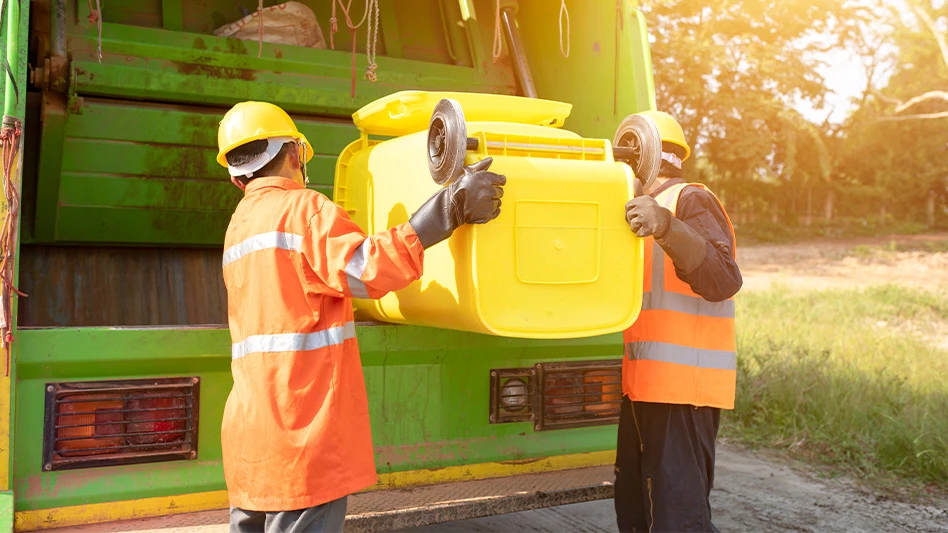
Under the New Planet model, residents would put all their waste into one bin. Municipalities would then deliver the collected material to New Planet’s St. Louis facility. Workers, aided by technology, would separate out valuable recyclables and the rest of the materials would be converted to SRF, which would be sold to large industrial users. The conversion process itself is completely indoors and controlled, releasing no harmful emissions or foul odors.
Additional benefits, according to New Planet, include:
- Reduction of St. Louis’s carbon footprint by diverting waste from landfills, which emit large amounts of greenhouse gases.
- Reduction of the number of trucks on the road, which in turn, reduces noise and wear and tear on city streets. Because residents can put all their waste in one bin, municipalities can significantly reduce the number of collection trucks and the number of miles their trucks drive, further reducing St Louis’ carbon footprint.
- A simpler, more effective system that is less confusing for residents. This process allows for 100 percent resident participation in recycling.
New Planet has control of a site and has received the environmental permits to build its $90M plant. Construction will begin once New Planet secures the necessary waste stream from St. Louis and the surrounding municipalities.
“St. Louis could become one of the first major cities in the U.S. to achieve a zero waste goal,” says Chris Goodson, a St. Louis entrepreneur, former police commissioner, and member of the local development team for the project. “Our goal is to reduce regional greenhouse gas emissions from landfills at the same time we provide a local solution to managing our solid waste, which in turn creates local jobs. This would be revolutionary for the St. Louis region and make it a better place for St. Louisans to live and businesses to thrive.”
A video regarding the project is available on New Planet’s website.
Latest from Waste Today
- Vermeer announces plan to build new facility in Des Moines metro area
- Buffalo Biodiesel shares updates on Part 360 application to DEC, Tonawanda facility progress
- Capstar Disposal expands roll off dumpster rental services
- Supreme Court strikes down IEEPA tariffs
- Casella details facility closures, expansion efforts
- Zero harm: Building a SIF prevention program for waste and recycling operations
- Casella posts a loss in Q4 2025
- McNeilus names Haaker Equipment first Dealer Partner of the Year