Transform Don't Trash NYC.
Anticipated legislation to reform New York City’s commercial waste system fell short of some industry professionals' and trade association’s expectations as New York City Council Member Antonio Reynoso introduced a bill that would divide the city into 20 commercial waste zones with one commercial hauler to serve each zone.
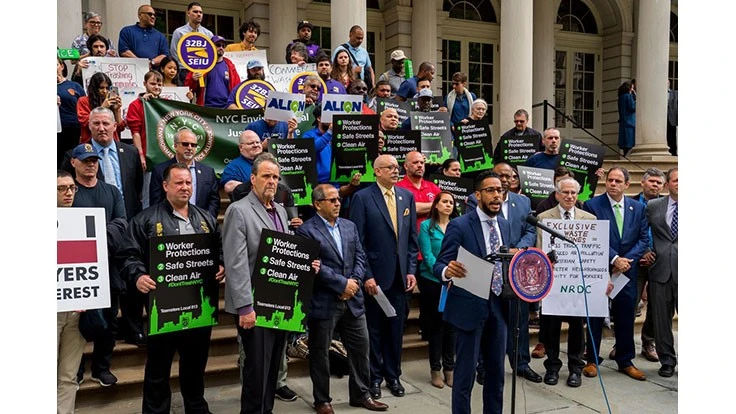
Reynoso, the bill’s primary sponsor, introduced the "exclusive" zone system at a rally May 29, which drew demonstrators and supporters. Introducing the bill, Reynoso said the commercial zone system would be a “catch-all solution that will finally transform the industry for the sake of workers, communities and the environment.”
The legislation takes a different approach from the New York City Department of Sanitation’s (DSNY) initial plan to divide the city into 20 zones with three to five haulers to service each zone, selected through a competitive process. DSNY's plan aims to reduce truck traffic by more than 60 percent, while also improving labor standards and creating a system that “works for carters of all sizes and prevents overreliance on any single company.”
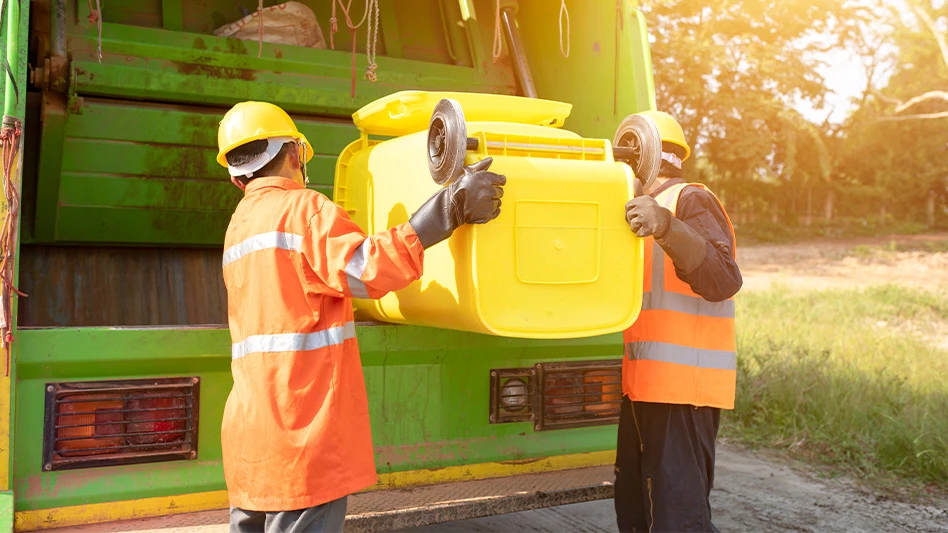
While DSNY is responsible for residential collections, more than 90 private waste companies handle the collection of commercial waste generated by businesses and restaurants across the city’s boroughs, according to a news release. More than 50 private haulers may service a single neighborhood, according to a news release, resulting in “chaotic” collection routes. Following the deaths of private waste hauler drivers, advocates have been pushing to reform the commercial waste system in New York City for years.
Under Reynoso’s proposal, private commercial companies would go through a competitive request for proposal (RFP) bid process for 10-year contracts. Bidding would also be open to outside companies, including Houston, Texas-based Waste Management. Similar to DSNY’s initial plan, Reynoso’s proposal would also require companies to meet stringent environmental, labor and safety standards.
However, Reynoso’s focus on an exclusive waste zone system has caused controversy and concern among some of the city’s haulers and industry trade associations, including New Yorkers for Responsible Waste Management (NYRWM), that have stated an exclusive zone system would disrupt the competitive local market.
While the city’s largest haulers, including The Woodlands, Texas-based Waste Connections, seem to support Reynoso’s proposal, some haulers and associations have labeled it as a “monopoly” system that would eliminate opportunity for the city’s small haulers. While NYRWM and DSNY support change to the commercial waste system, the groups have said a non-exclusive zone system would better sever the local market and customers.
Following a sanitation committee hearing, the council could vote on the legislation as early as June. There is much speculation on how industry associations and businesses will lobby for or against the bill in the time leading up to the final council vote.
Latest from Waste Today
- Vermeer announces plan to build new facility in Des Moines metro area
- Buffalo Biodiesel shares updates on Part 360 application to DEC, Tonawanda facility progress
- Capstar Disposal expands roll off dumpster rental services
- Supreme Court strikes down IEEPA tariffs
- Casella details facility closures, expansion efforts
- Zero harm: Building a SIF prevention program for waste and recycling operations
- Casella posts a loss in Q4 2025
- McNeilus names Haaker Equipment first Dealer Partner of the Year