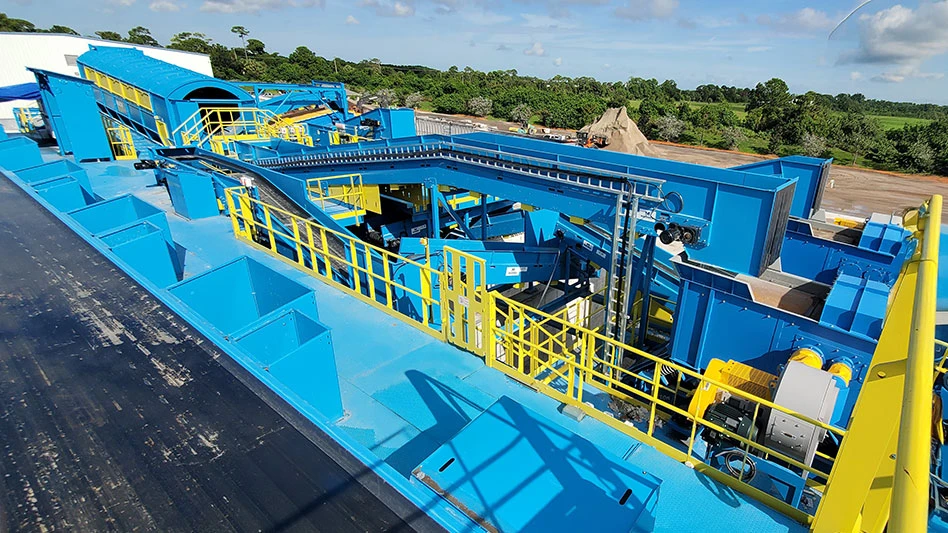
The National Waste and Recycling Association (NWRA) announced Dec. 11 it has released its “Waste, Construction, Demolition, and Recycling Material Recovery Facility Temporary Worker Recommended Practices” guide. The guide is meant to give waste and recycling operators tools to better enforce safe workplace practices for temporary workers.
According to the U.S. Bureau of Labor Statistics (BLS), while the waste and recycling industry has seen an increase in nonfatal workplace injuries and illnesses, the rate at material recovery facilities (MRFs) decreased significantly from 9.8 to 4.9. Still, more can be done to cut down on workplace accidents involving temporary workers.
“The decrease [in injuries and illnesses] at MRFs is promising, but today’s numbers show that we have yet to make real progress out on the roads where our collections workers face numerous hazards on a daily basis. We need to redouble our efforts and make sure that we are doing all that we can to protect our employees. The numbers today demonstrate that we have serious challenges ahead,” NWRA President and CEO Darrell Smith says.
NWRA says it is working to reduce injuries and fatalities in the industry through several initiatives, including:
- an alliance with the Occupational Safety and Health Administration (OSHA)
- a partnership with the Environmental Research and Education Foundation (EREF) that involves a request for proposals to provide a baseline analysis for what is occurring in the industry
- improving the organization’s safety message through the redesign of the NWRA’s weekly safety newsletter, Safety Monday.
Latest from Waste Today
- Vecoplan to present modular solutions at IFAT 2026
- Terex Ecotec appoints Bradley Equipment as Texas distributor
- My Green Michigan expands depackaging capacity
- Washington selects Circular Action Alliance as PRO
- Ten-8 Industrial opens new central Florida service center
- Triumvirate Environmental acquires Environmental Waste Minimization
- Official NYC Bin availability expands ahead of deadline
- US Food Waste Pact’s 2025 Impact Report shows decrease in food waste