OliverFoerstner | stock.adobe.com
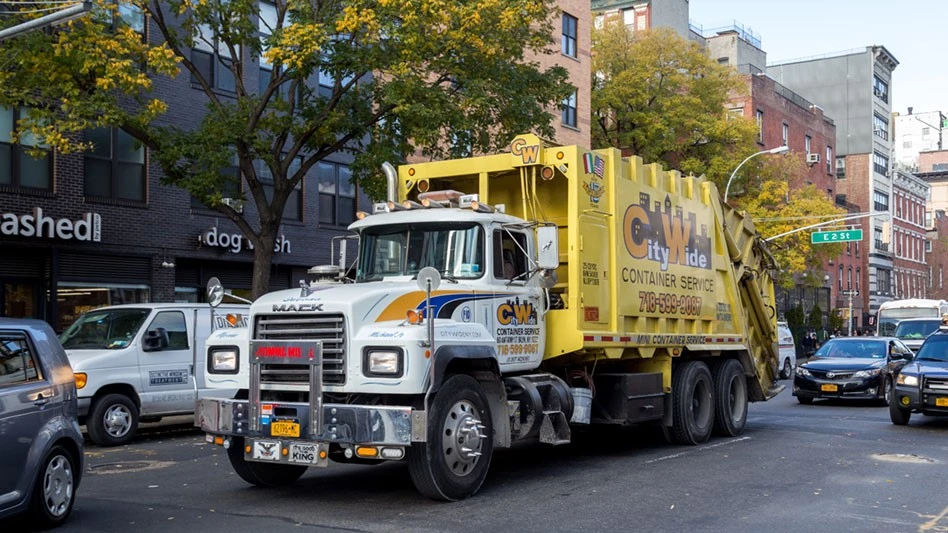
The Arlington, Virginia-based National Waste & Recycling Association (NWRA) has filed comments with New York City’s Metropolitan Transportation Authority (MTA) regarding its proposed Central Business District Tolling program.
NWRA urged the MTA to grant an exemption to the private waste and recycling industry.
“While NWRA appreciates the efforts of the MTA to reduce traffic congestion, the Central Business District Tolling program would have unintended consequences for the waste and recycling industry,” NWRA Vice President of Chapter Management Lew Dubuque says. “Without an exemption, this added fee is an additional tax on the industry that will be passed along to customers.”
According to the MTA, it was estimated in 2018 the congestion in New York City’s Central Business District could cost businesses, commuters and residents $100 billion over five years. Also, between 2010 and 2019 travel speeds in Manhattan’s Central Business District decreased from 9.1 mph to 7.1 mph.
The MTA hopes the toll system will reduce traffic in and around the Central Business District, provide a source of money to invest in bus, subway and rail systems, improve air quality, promote equity in travel and reduce travel times for those who must drive in the city.
In his letter to the MTA, Dubuque also says NYC haulers have undergone a rigorous bidding process for city contracts to provide hauling and recycling services for 20 commercial zones in the city.
“In late July, many waste and recycling companies submitted bids to collect waste in these 20 zones,” he says in his comments. “This was an incredibly complex process with DSNY (the NYC Department of Sanitation) placing a strong emphasis on haulers providing high-quality services at a low cost. Haulers have had to calculate skyrocketing inflation and labor costs into [their] calculations when putting together these bids.”
In its comments, NWRA recommended MTA follow the example of London and exempt the toll from certain hours during periods of reduced congestion.
The DSNY says haulers must keep prices at or below “established maximum rates to all customers they service in a particular zone. The agreement contains automatic annual rate increases tied to inflation and also allows carters to petition DSNY for separate rate increases in addition to the automatic inflation-based adjustments. DSNY will consider evidence presented in any petitions and will decide whether or not to allow any requested increases,” DSNY says.
Editor's note: This article has been updated to include comments from the New York City Department of Sanitation.
Latest from Waste Today
- Vecoplan to present modular solutions at IFAT 2026
- Terex Ecotec appoints Bradley Equipment as Texas distributor
- My Green Michigan expands depackaging capacity
- Washington selects Circular Action Alliance as PRO
- Ten-8 Industrial opens new central Florida service center
- Triumvirate Environmental acquires Environmental Waste Minimization
- Official NYC Bin availability expands ahead of deadline
- US Food Waste Pact’s 2025 Impact Report shows decrease in food waste