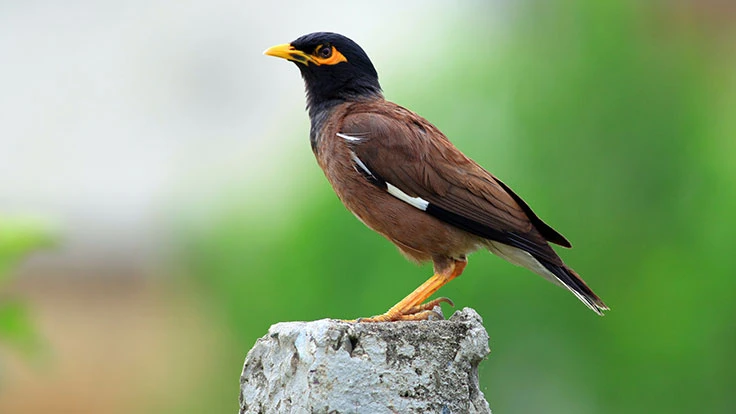
Birds are getting injured by the invisible flare from a local closed landfill in New Jersey, a report by The Record says.
Raptors and smaller birds are attracted to the landfill’s grasslands habitat. Since raptors are protected under the federal Migratory Bird Treaty Act, the landfill operators could be fined up to $15,000 for each injured bird, according to the report.
The New Jersey Sports and Exposition Authority, who maintains the landfill in the Meadowlands after it closed in 1988 and was remediated in the 1990s, has been in contact with U.S. Fish and Wildlife Service officials and several other consultants about how to address the issue since there is no national standard for it, the report says.
Spokeswoman for the U.S. Fish and Wildlife Service Megan Racey told The Record that one method being used in the U.S. is to reduce the flames from constantly flaring off to flaring off intermittently. Other ideas, she said, range from modifying to stack or making the flame more visible to the birds through additives.
A consultant to the sports authority also suggested reducing the size of the exposed flame by lengthening the wind shroud around it and making changes to its internal workings, the report says. The authority are also considering installing a blockade to keep birds from landing on the flame stack.
The authority’s consulting engineer is finalizing design plans and the agency is attempting to schedule a meeting with regulators in April, according to the report. The sports authority has already cut down surrounding trees to stop birds from perching in the area while hunting for prey.
The sports authority said they are also open to working with a company to capture the methane and use it to produce energy, the report says.
Raptors and smaller birds are attracted to the landfill’s grasslands habitat. Since raptors are protected under the federal Migratory Bird Treaty Act, the landfill operators could be fined up to $15,000 for each injured bird, according to the report.
The New Jersey Sports and Exposition Authority, who maintains the landfill in the Meadowlands after it closed in 1988 and was remediated in the 1990s, has been in contact with U.S. Fish and Wildlife Service officials and several other consultants about how to address the issue since there is no national standard for it, the report says.
Spokeswoman for the U.S. Fish and Wildlife Service Megan Racey told The Record that one method being used in the U.S. is to reduce the flames from constantly flaring off to flaring off intermittently. Other ideas, she said, range from modifying to stack or making the flame more visible to the birds through additives.
A consultant to the sports authority also suggested reducing the size of the exposed flame by lengthening the wind shroud around it and making changes to its internal workings, the report says. The authority are also considering installing a blockade to keep birds from landing on the flame stack.
The authority’s consulting engineer is finalizing design plans and the agency is attempting to schedule a meeting with regulators in April, according to the report. The sports authority has already cut down surrounding trees to stop birds from perching in the area while hunting for prey.
The sports authority said they are also open to working with a company to capture the methane and use it to produce energy, the report says.
Latest from Waste Today
- Worn Again Technologies unveils Accelerator plant to advance polycotton recycling
- Nashville Waste Services launches new digital route system
- ACUA landfill expansion project unanimously approved
- Clean Energy announces multiple RNG deals with fleets nationwide
- Interchange 360 to operate alternative collection program under Washington’s RRA
- Waste Pro files brief supporting pause of FMCSA CDL eligibility rule
- New Way Trucks expands US network with Joe Johnson Equipment
- Tire Industry Project publishes end-of-life tire management guide