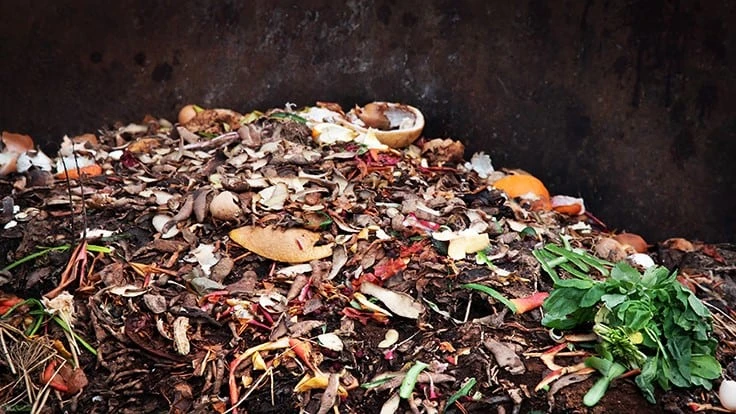
Residents and businesses in Orange County, North Carolina, successfully diverted more than 946,000 pounds of trash from local landfills over the last year through composting, according to the county’s compost report published in October.
As reported by The Daily Tar Heel, Orange County's commercial food waste collection program includes five drop-off sites and is offered at no cost to businesses and restaurants. Roughly 50 businesses use the program, including restaurants, flower shops and cafes.
Chapel Hill Mayor Pam Hemminger, who is on the Solid Waste Advisory Group for Orange County, said the program started small but has grown significantly.
“It was grocery stores at first, and they kind of took it upon themselves to continue on because they realized it wasn’t that big a deal for them to sort it that way," she told The Daily Tar Heel. "And they saved money from hauling the garbage off, so it actually saved them some money just to get in the habit.”
The Purple Bowl, an eatery located within the county, is one business that uses compostable products for its takeout containers.
“When you produce a lot of trash, you choose to help with that when you use compostable packaging," Sabine Farer-Buers, general manager of The Purple Bowl, said. "Especially during COVID, takeout has gotten so much bigger. Even though it’s more expensive for us, it’s better for the environment.”
Farer-Buers said The Purple Bowl is trying to use compostable products, but not all of their current takeout containers are compostable due to shortages caused by COVID-19.
CompostMates at Carolina, a student organization at The University of North Carolina (UNC), has also helped off-campus students get involved with composting.
The organization aims to provide a free pickup service for food scraps to off-campus students and other individuals who lack easy access to composting. The composted food scraps are then donated to three community gardens.
Simone McFarlane, sustainability chairperson of CompostMates, said she hopes people in the broader Orange County community will get more involved with composting.
“The more that people compost, the more normal it becomes, the more that we have an impetus to create waste management policies that are more reflective of these values of respecting our environment and respecting the people that live within,” she said.
Latest from Waste Today
- Vermeer announces plan to build new facility in Des Moines metro area
- Buffalo Biodiesel shares updates on Part 360 application to DEC, Tonawanda facility progress
- Capstar Disposal expands roll off dumpster rental services
- Supreme Court strikes down IEEPA tariffs
- Casella details facility closures, expansion efforts
- Zero harm: Building a SIF prevention program for waste and recycling operations
- Casella posts a loss in Q4 2025
- McNeilus names Haaker Equipment first Dealer Partner of the Year