Jenifoto | stock.adobe.com
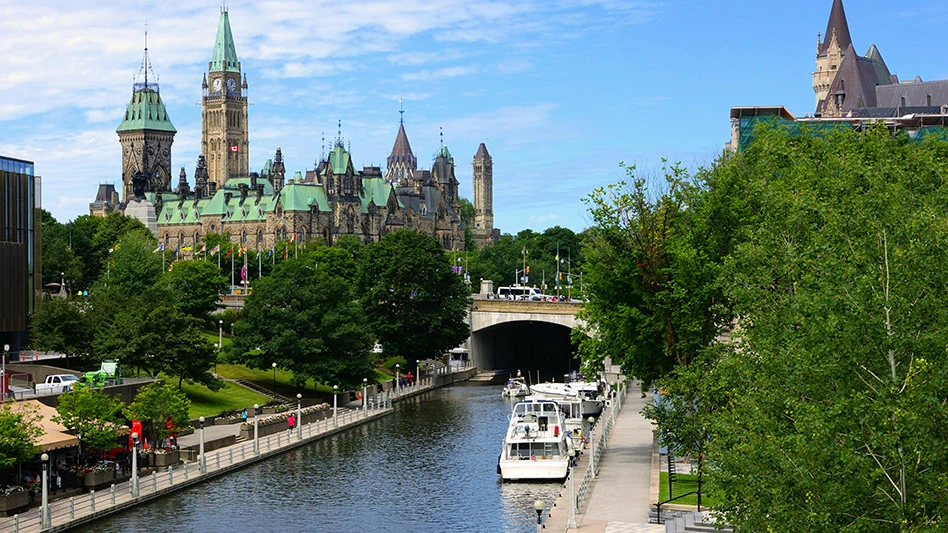
The city of Ottawa, Ontario, has identified a waste-to-energy (WTE) incinerator as an ideal option to handle the city’s future waste volumes.
With the nearby Trail Road Landfill expected to reach capacity within the next 10 to 15 years, as reported by CTV News, the city is exploring “proven technologies” to address future waste management needs, including incineration and mixed waste processing.
The city explored options including:
- status quo and private landfills once the Trail Road Landfill is full;
- a waste-to-energy incineration facility;
- a mixed waste processing facility;
- a waste-to-energy incineration and a mixed waste processing facility; or
- building a new landfill.
A report for the Environment and Climate Change Committee meeting on June 17 states that a feasibility study recommended two top-ranked options: building a WTE incineration facility or continuing to dispose of non-diverted waste at the Trail Road Landfill until it reaches capacity and then using one or several private landfills in the region.
Staff recommend the city conduct an “in-depth evaluation” of three scenarios; the use of private facilities once Trail Road is full, building an incinerator in Ottawa, and also explore building a new municipal landfill because it would be required if the city does proceed with a WTE incinerator or a mixed waste processing facility.
“The WTE incineration facility was the highest ranked technology, as it offers significant environmental benefits, including a 77 percent landfill diversion rate and energy recovery, which aligns with the city’s strategic priorities,” the staff says. “However, the implementation of a WTE incineration facility presents substantial capital costs ($497 million to $862 million), a complex regulatory approval process and divided public support.”
A new landfill would cost an estimated $439 million and $761 million. The report does not provide a cost for the scenario using private landfills, but staff estimated tipping fees would increase from the current $150 per ton to $250 per ton.
The two other scenarios the city considered but decided not to explore further are building a mixed waste processing facility or a scenario using both a waste-to-energy incineration facility and a mixed waste processing facility. Staff say that a mixed waste processing facility would increase waste diversion by 8 percent, and 92 percent of incoming waste still would require landfilling.
The report recommends that the council direct staff to launch an evaluation of the three scenarios and report back with a recommendation and a finalized business case as “soon as practical within the next term of council.” The next term of council will decide how Ottawa handles its future waste.
“From approvals to implementation, long-term solutions can take upwards of 10 years. Therefore, a decision on Ottawa’s future waste management system is required by 2029. This would allow for a new landfill or technology to be developed and assumes the above-noted initiatives are successful in extending the life of Trail,” the report states.
The city of Ottawa generated 201,100 tons of municipal solid waste and bulky waste in 2024, reports CTV News.
Latest from Waste Today
- Oregon DEQ issues enforcement order, $3M civil penalty to Valley Landfills
- Sierra International Machinery adds to sales team
- Vernon County, Wisconsin, landfill expansion remains stalled amid DNR delays
- Gregory Anderson appointed as DSNY commissioner
- Fort Point Capital invests in Boston Green
- Docket Dumpster Software evolves into Docket Waste Software
- McNeilus introduces AI material contamination detection technology
- Closed Loop report identifies opportunities to increase prescription pill bottle recycling