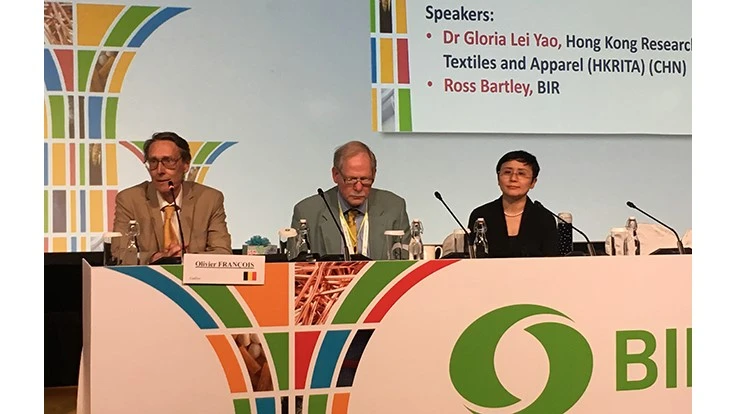
The Basel Convention and Stockholm Convention, both affiliated with the United Nations, are codifying global concerns about the use and recycling of plastic, according to panelists at the International Environment Council (IEC) meeting of the Bureau of International Recycling (BIR). The Brussels-based BIR held its 2019 World Recycling Convention in May in Singapore.
IEC Chairman Olivier Francois of Belgium-based Galloo, said the two conventions and the agencies that oversee them were created because “there were a lot of transboundary shipments [of potentially hazardous materials] from developed countries to developing nations; it was a very problematic situation in the 1980s.”
Now, however, the Basel Convention is taking steps to classify plastic scrap as a hazardous waste, pointing to the presence of brominated flame retardants (BFRs) and other chemicals found in some plastics. The Stockholm Convention was created in large part to regulate materials containing chemicals labeled as persistent organic pollutants (POPs). Currently, the convention is seeking to add several BFRs to its POPs list.
A presentation by BIR Trade & Environment Director Ross Bartley said the presence of discarded plastic in the world’s oceans and natural environment—and graphic images of birds and aquatic life choking on plastic—have helped spur the two conventions into seeking stricter regulations on the global plastic scrap trade.
Changes to the Basel Convention would place restrictions on plastic scrap flows from developed nations (those belonging to the Organization of Economic Cooperation and Development, or OECD) to developing countries. Most OECD nations are signatories to the convention, with the exception of the United States.
Bartley said some of the definitions and terms have been finalized, leaving questions as to which particular materials will be affected, or even how a “recycling operator” is defined. What is clear, said Bartley, is the Basel Convention intends to “minimize transboundary movements” of plastic scrap, and that shipments deemed illegal will be “treated as criminal” activity.
Additionally, the Basel Convention’s proposed Plastic Waste Partnership and Household Waste Partnership are attempts to codify how recyclable materials are collected in signatory nations. Bartley said the recycling industry “has to be included” in this conversation, to help protect “high-quality scrap that can go to a consuming destination.” The fear of Bartley and others pertains to an ongoing dialogue at the 2019 BIR Convention relative to the mislabeling of recyclable materials as “waste.”
The Stockholm Convention, meanwhile, is adding to its list of POPs, potentially more than doubling its list from 12 to 28 chemicals. Several of the proposed additions have been used as flame retardants or additives in commonly recycled items.
Should plastics containing traces of these chemicals be declared nonrecyclable, Bartley said it will pose a contradiction to the recycling targets set by the European Union and in other nations, especially for waste electrical and electronic equipment (WEEE) and for end-of-life vehicles (ELVs).
POPs are gaining attention as a problem, said Bartley, with some politicians even having taken blood tests to find that these chemicals can indeed be found in their own blood and body tissue. “The politicians are engaged in this,” he stated. “We’re in a difficult position as recyclers. We’ve really got to be on the right side of this argument,” he cautioned.
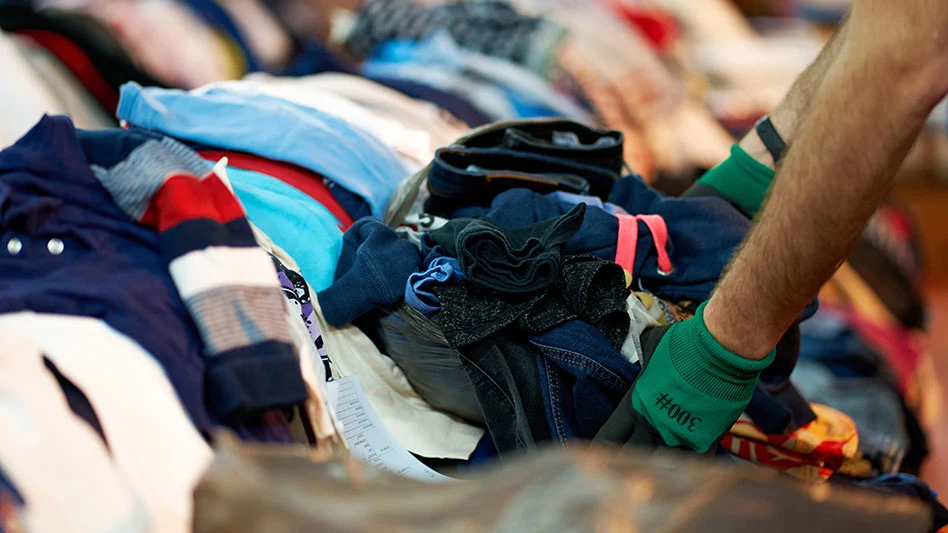
Also at the IEC meeting, Gloria Yao of the Hong Kong Research Institute of Textiles and Apparel (HKRITA) provided an overview of that organization’s efforts to upgrade and expand mechanical and chemical processes to recycle discarded apparel and fabric.
Yao said retailers and garment makers (including Sweden-based H&M) are helping to fund the research, which includes a Garment-to-Garment (G2G) pilot plant that creates usable fabric yarn from discarded clothing. HKRITA describes the G2G pilot, located in the New Territories of Hong Kong, as “a mini production line that recycles post-consumer garments into clean and wearable clothes.”
Other processes being researched by HKRITA involve biological and hydrothermal treatment processes designed to create end products such as cellulose powder and polyester plastic resin products.
The 2019 BIR World Recycling Convention & Exhibition was held May 19-22 at the Shangri-La Hotel in Singapore.
Latest from Waste Today
- My Green Michigan expands depackaging capacity
- Washington selects Circular Action Alliance as PRO
- Ten-8 Industrial opens new central Florida service center
- Triumvirate Environmental acquires Environmental Waste Minimization
- Official NYC Bin availability expands ahead of deadline
- US Food Waste Pact’s 2025 Impact Report shows decrease in food waste
- Coastal Waste & Recycling expands recycling operations with Machinex
- Reconomy acquires German-based GfAW