Photo courtesy of Remedi
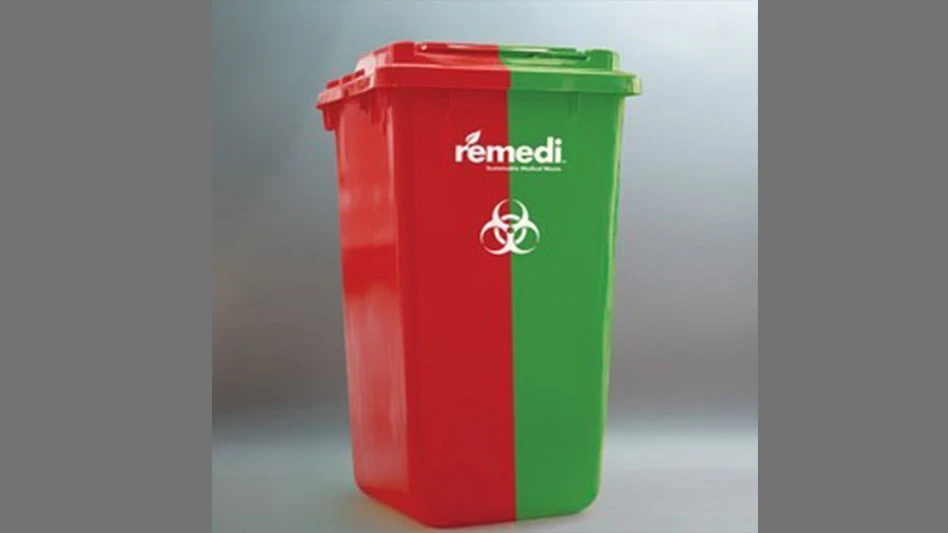
Remedi has secured a permit to recycle regulated medical waste in Texas.
The San Antonio-based firm says the permit marks a major advancement in the nation’s health care sustainability landscape. Remedi has implemented a next-generation processing technology that goes beyond sterilization alone, which it says makes it possible to recover and recycle medical plastics and other materials that would otherwise be discarded.
Remedi says its technology significantly reduces landfill contributions and emissions.
“Our mission is to set a new standard for compliance, safety and sustainability in medical waste management,” says Monica Kugler, vice president of operations at Remedi. “By recycling regulated medical waste, we not only protect healthcare providers from compliance risks, but also help them meet environmental, social and governance (ESG) goals through measurable landfill and carbon reductions.”
According to the firm, each 500-bed hospital working with Remedi can divert more than 150,000 pounds of medical waste per year, preventing approximately 200 metric tons of CO₂ e emissions compared to incineration-based disposal.
Remedi says it currently operates both traditional autoclave and advanced recycling facilities, with plans to expand its recycling network nationwide in partnership with hospitals, clinics and research organizations committed to sustainable health care.
“Our technology closes the loop on health care sustainability,” Remedi President Christopher Baryla says. “We’re giving hospitals a compliant, data-backed way to reduce carbon impact without compromising safety or efficiency.”
Latest from Waste Today
- Fleetio launches AI capability to accelerate fleet maintenance approvals
- Recycle Ann Arbor extends drop-off station operating hours
- Sybilion seeks to help manufacturers confidently address volatility
- Ecowaste Solutions partners with city of Trinity, Texas
- Bristal Hauling acquires G&R Garbage Disposal
- Baltimore trash collection expected to slow as WTE facility closes for maintenance
- Landfill Insights | Connecting the dots: Policy to practice
- FCC Environmental Services awarded collection contract in Florida