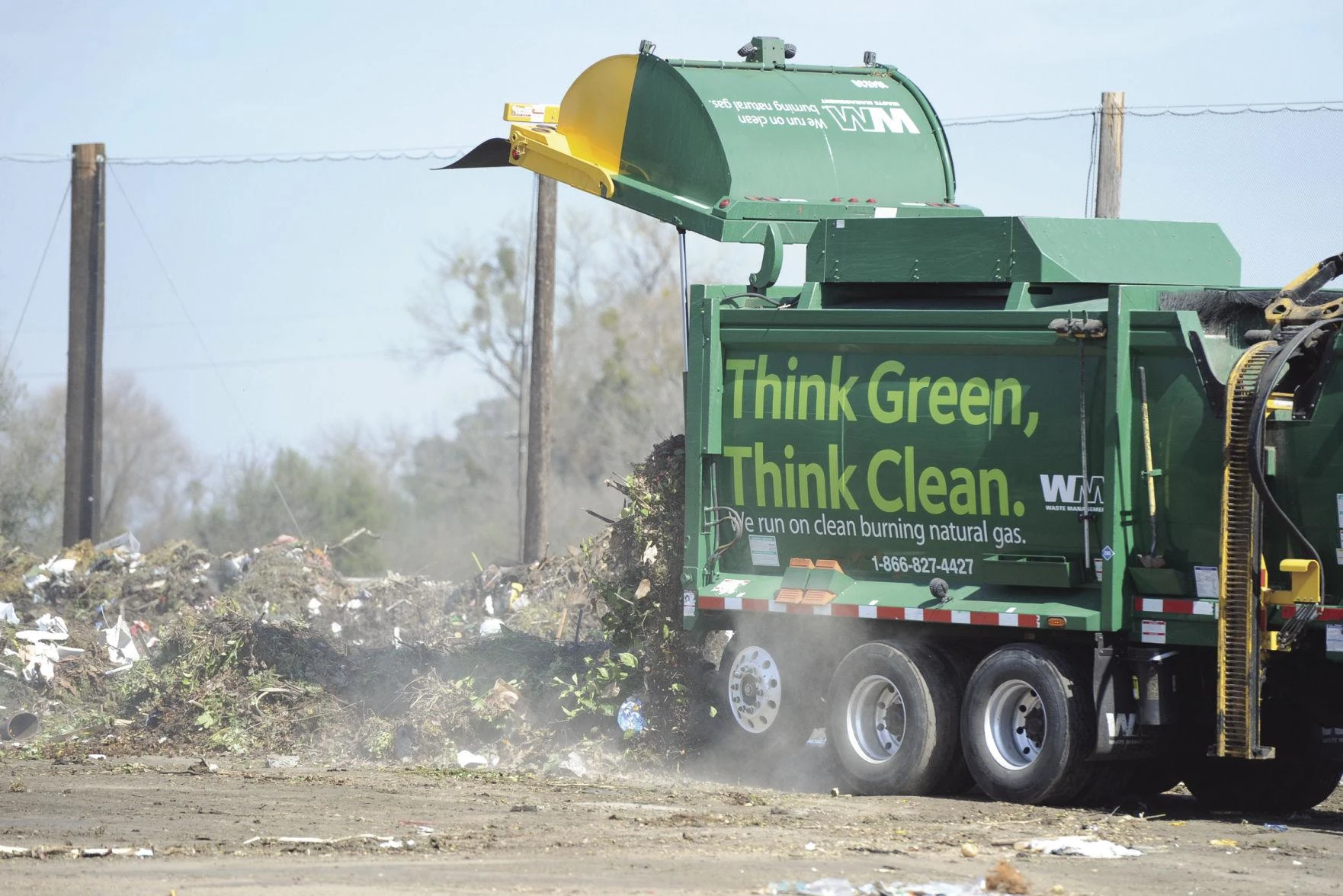
The City of Lodi and Waste Management (WM) have unveiled a new waste collection rate structure following two years of extensive negotiations and taking resident feedback into consideration. Their innovative approach is aimed at ensuring compliance with SB 1383, a landfill waste reduction mandate that is focused on reducing organics waste landfill disposal by 75% by 2025.
At a meeting this week, City of Lodi staff and Waste Management representatives presented up-to-date waste collection rates to the city council. The proposed rate structure is set to take effect from September 1 and brings about some significant changes. One of the notable adjustments is the elimination of the 20-gallon trash carts. Instead, nearly 3,600 customers will be upgraded to 35-gallon carts. The rate for these customers will be set at $26.85 per month, representing a $5 increase compared to their current bill.
The collaboration between WM and city staff has been designed to secure the best possible agreement for the citizens of Lodi, according to public works director Charles Swimley. "Maybe we didn't hear loud and clear enough before this last round, but on April 5 we heard loud and clear what we needed to do to get where we need to be with the right-sized carts and right-sized rate structure,” he remarked, according to reporter Wes Bowers (Lodi News-Sentinel, Calif.).
Approximately 10,600 customers who possess 35-gallon trash bins will experience a $5 increase in their monthly bills, totaling $37.11. Similarly, customers with 64-gallon carts will also have a $5 increase to a new monthly total of $53.34.
On the other hand, the 580 customers with 96-gallon carts can expect their bills to decrease by $46, reaching a new monthly total of $59.34.
The waste management improvements also address issues of overfilling and cross-contamination. To educate and guide residents, warning notices will be issued to those who repeatedly exceed capacity or fail to separate their waste appropriately. If a resident accumulates two or more overage or contamination incidents between September and December, they will receive a notice in January, indicating an automatic upgrade to the next bin size by March 2024.
WM plans to utilize video surveillance equipment installed on their trucks to monitor cross-contamination effectively. They will also contribute funding for a full-time position within the city to oversee waste management operations. To ensure residents are well-informed, the City of Lodi will send a Proposition 218 notice to all customers by June 26, which will contain comprehensive details about the new regulations.
The final decision regarding the new rates will be made during a public hearing and vote scheduled for August 16. Residents can anticipate the arrival of new color-coded carts by March of next year. Green lids will be designated for yard and organic waste. Carts with black lids will be used for trash, and blue-lidded carts will be designated for recycling.
One critical aspect of waste management reform is the proper handling of food waste. Starting in March, residents will be required to dispose of food waste in the yard waste carts during weekly pickups. This shift in practice aligns with the overarching goal of SB 1383, which aims to reduce organic waste disposal in landfills from 23 million tons to 5.7 million tons.
Organic waste comprises a wide range of materials, including food, green material, landscape waste, organic textiles, lumber, paper products, and more. The decomposition of these organic materials produces methane, a potent climate pollutant that is 84 times more potent than carbon dioxide. In fact, organic materials account for 20% of California's methane emissions.
It's worth noting that the City of Lodi faced potential fines amounting to $10,000 per day for failing to comply with SB 1383 by January 1, 2023. Although the city requested an extension, it was denied. The possibility of fines now hinges on a meeting between staff members and CalRecycle, scheduled for this Friday. Lodi is not alone in this journey toward compliance; nine other jurisdictions in California are yet to finalize their rate change agreements.
Latest from Waste Today
- Vecoplan to present modular solutions at IFAT 2026
- Terex Ecotec appoints Bradley Equipment as Texas distributor
- My Green Michigan expands depackaging capacity
- Washington selects Circular Action Alliance as PRO
- Ten-8 Industrial opens new central Florida service center
- Triumvirate Environmental acquires Environmental Waste Minimization
- Official NYC Bin availability expands ahead of deadline
- US Food Waste Pact’s 2025 Impact Report shows decrease in food waste