Photo courtesy of Autocar Trucks
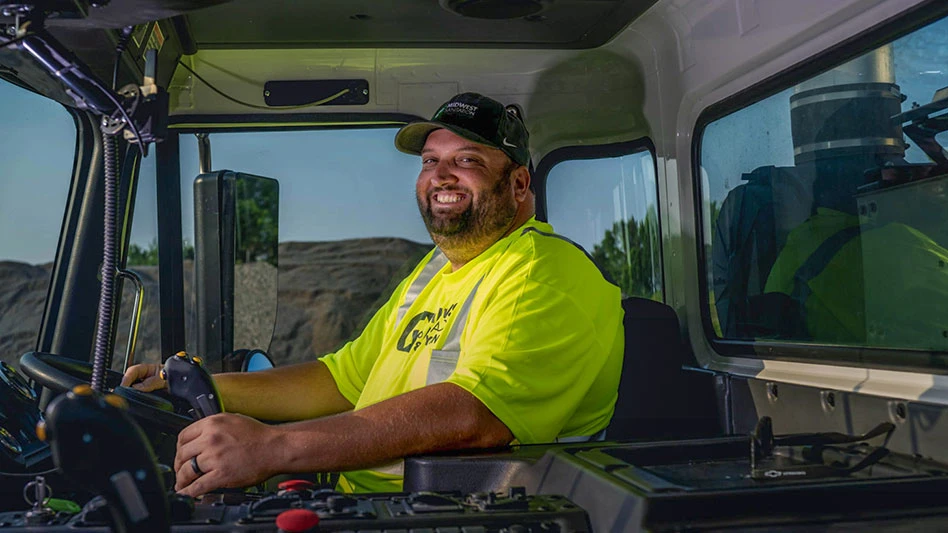
Every morning before the sun comes up, a refuse truck operator named Mike starts his shift. He rolls out into quiet neighborhoods, steering a heavy vocational vehicle that gets heavier as the day goes on. He navigates it through tight residential streets, alleys and intersections—all before most people have had their first cup of coffee.
It’s a tough job. And from where I sit as someone who’s been in this industry for over three decades, I’ll tell you this: If we don’t give that operator every possible tool to help him do his job safely, we’re not doing our jobs.
That’s why I believe the operator is the most important person in the loop. When we talk about safety, uptime and community impact—they all begin and end with the person behind the wheel.
If we’re serious about protecting lives and livelihoods, we have to be serious about equipping operators with advanced, integrated safety technology that’s built specifically for how they work.
Fortunately, technology has come a long way, and it’s more advanced and capable than I believe most residents realize—and even more than many in the industry realize, too.
Turning tech into a second set of senses
The reality is that operating a refuse truck today means making hundreds of decisions in a single route. Operators are watching for kids darting out between cars, managing constantly shifting situations, navigating tight turns in alleys and trying to stay on schedule.
Operators can handle a lot, but why make them do it all by themselves? Why not give them intelligent systems that help watch those blind spots, scan the road for hazards and step in to assist when milliseconds count?
Take Mike, our hypothetical operator. Let’s walk through his day.
He starts up the truck and gets ready to head out. A lot of traffic signs are along the way, and they’re all important. We want to make sure they're seen and followed.
That's why Mike’s truck is equipped with road sign recognition technology, which identifies those critical signs—speed limits, school zones and weight restrictions—and alerts him instantly. He doesn’t have to squint or second-guess.
That’s what it means to assist operators: Help make them safer, sharper and more confident in their decisions. I'm amazed by just how well safety systems today can augment an operator’s senses, and I’m excited for what they can do in the future.
A layered approach to operator assistance
Back to Mike’s route. He’s approaching a busy intersection, and a delivery van suddenly brakes in front of him. In that split second, Mike starts to react—but the automatic braking system already has. It’s been scanning the road ahead, calculating distance, velocity and stopping time. It engages the brakes automatically, helping him avoid what could’ve been a serious collision.
That kind of help is invaluable in the refuse world. Because, let’s face it, our operators are dealing with the unexpected every day. Dogs running loose. Bicyclists sneaking up on the side. A toddler chasing a ball into the street. These are not theoretical scenarios—they’re real, and they happen fast.
With a combination of cameras, radar and smart braking logic, today’s refuse trucks provide multiple layers of awareness. The truck gives the operator another set of eyes. It responds when there’s no time to hesitate. And it communicates with the operator in real-time—subtle alerts, clear visuals and automatic actions when necessary.
Seeing more than mirrors ever could
One of the most transformative changes I’ve seen over the years is in 360-degree visibility. We used to rely entirely on mirrors, backup alarms and an operator’s memory of what was around the vehicle.
Today, our trucks have the option of being equipped with a suite of high-resolution cameras—rear-facing and side-mounted—so operators like Mike can see everything happening around them.
Turn signals trigger the side cameras. Putting the truck in reverse activates the rear view. Radar supplements the visuals by detecting pedestrians or objects that might be hidden from the camera’s view.
When these systems work together, they give Mike a full picture—one that no mirror or single camera could provide on its own. That kind of situational awareness is what helps prevent accidents, reduces stress and builds operator confidence.
Protecting the most vulnerable people on the route
Our operators work in proximity to people—on sidewalks, in crosswalks and near playgrounds. These are our neighbors and families, and we want to deliver great service to the highest standards of safety possible.
That’s why trucks today can be built with pedestrian and cyclist detection to recognize people. Not just large vehicles or objects, but human forms—moving at different speeds, from different angles, in all types of weather.
When a cyclist is approaching on the blind side, or a pedestrian gets too close during a turn, the system alerts the operator and, if needed, applies the brakes automatically.
This is where real engineering shines—not just detecting motion but also understanding context, such as knowing the difference between a mailbox and a stroller. That’s the result of years of hard work from bright engineers for whom safety is a personal mission.
Reverse with confidence, not guesswork
One of the most stressful parts of operating a heavy-duty refuse truck is backing up. That’s where many accidents happen because it’s tough to see back there, especially in tight quarters.
But with modern reverse safety technology options, we’ve changed that. Systems today can use a combination of radar and cameras to create a zone of awareness behind the truck.
When Mike backs into a tight alley, he’s not relying on memory. He’s got sensors watching every angle, alerting him if something enters the danger zone. And if needed, the truck can brake on its own.
That’s how you back up a vehicle of varying weights in a variety of road conditions – with the confidence that your tool was built for your work.
Built for the job—not borrowed from the highway
Now, let’s be honest: Refuse work doesn’t look anything like a highway haul. Constant stops. Tight quarters. Side streets. Reversing into alleys. These are edge cases for OTR, or over the road, trucks—but they’re constant in refuse.
Our trucks operate in a totally different world. We stop and start constantly. We reverse in tight quarters. We drive through crowded neighborhoods, past schools and parks, and often with limited maneuvering space.
Building a tool once correctly yields a safer product. Integration of chassis and body from the start, with the safety system in mind, is the only way that can happen because that’s how you can ensure the tool is calibrated for the unique demands of our industry.
When Mike pulls that truck into the bay at the end of the day, he has one thing on his mind: going home to his family.
We owe it to our operators to help them get there safely, every single time, satisfied that they did their job and took care of their communities. That they were able to do their part to protect their family and the families they served that day.
Technology can help; we just have to commit to equipping our fleets with the latest advancements, train our operators to use them and keep thinking of and building better ways to do better tomorrow than we did today.
James "Jimmy" Johnston has been president of Autocar Trucks since 2003. A 2025 inductee into the National Waste & Recycling Association Hall of Fame, he has been engaged in the truck and body business, serving severe-duty industries, since 1986. With a focus on the refuse industry since 1992, Johnson has been driving chassis and body integration while making safety a top priority.
Latest from Waste Today
- Fleetio launches AI capability to accelerate fleet maintenance approvals
- Recycle Ann Arbor extends drop-off station operating hours
- Sybilion seeks to help manufacturers confidently address volatility
- Ecowaste Solutions partners with city of Trinity, Texas
- Bristal Hauling acquires G&R Garbage Disposal
- Baltimore trash collection expected to slow as WTE facility closes for maintenance
- Landfill Insights | Connecting the dots: Policy to practice
- FCC Environmental Services awarded collection contract in Florida