peteri | stock.adobe.com
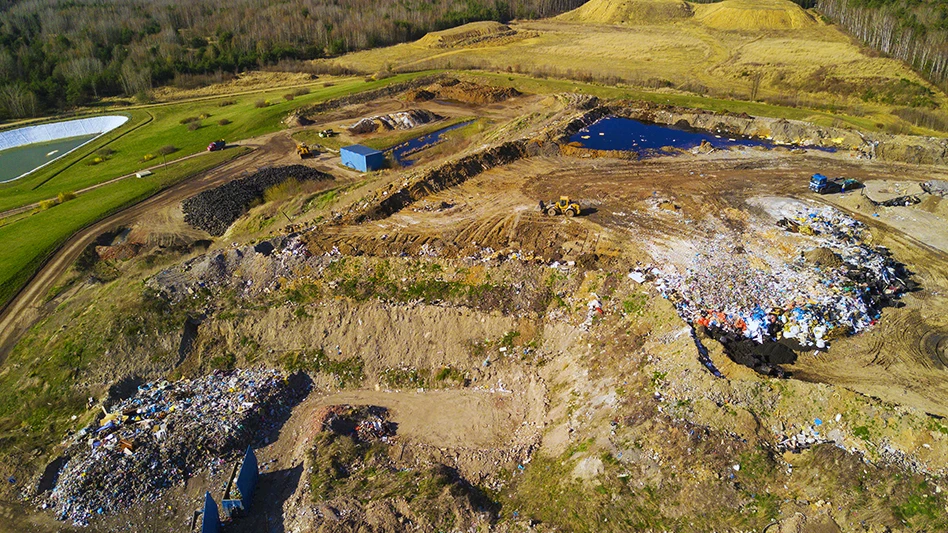
The North Carolina Department of Environmental Quality (NCDEQ) has negotiated a special order by consent (SOC) with Sampson County Disposal LLC, a subsidiary of Vaughan, Ontario-based GFL Environmental, to phase in treatment and removal of per- and polyfluoroalkyl substances (PFAS) from groundwater at the Sampson County Landfill.
“Forever chemicals like PFAS and GenX cause significant health harms, and this agreement demonstrates Sampson County Disposal’s commitment to address PFAS contamination in our water,” NCDEQ Secretary Reid Wilson says. “Installing this treatment system will help protect water quality for residents of Sampson County and North Carolinians downstream. While the landfill is a receiver and not a producer of PFAS chemicals, DEQ will continue to work to address PFAS discharges at the source—the most cost-effective way to protect public health and lower the cost of meeting federal drinking water standards.”
According to the department, an estimated 3.5 million North Carolinians drink tap water that has PFAS levels above the U.S. Environmental Protection Agency (EPA) health-based standard scheduled to go into effect in 2029. The deadline may be extended to 2031, according to the agency’s May announcement.
RELATED: Just passing through: The life cycle of PFAS
The North Carolina Environmental Management Commission, the rule-making body for NCDEQ, and Sampson County Disposal entered into the special order by consent Nov. 10. As part of the agreement, Sampson County Disposal will install an advanced treatment system limiting discharge of five PFAS compounds (PFOS, PFOA, GenX, PFNA and PFHxS) and report measurements of all remaining PFAS chemicals listed in the SOC. The SOC requires the treatment system to achieve a minimum of 50 percent reduction by Jan. 14, 2026, and 90 percent by April 14, 2026. It also requires the landfill to meet final concentration levels listed in the SOC starting Nov. 15, 2026.
NCDEQ says GFL has been cooperating with the department to reach this agreement, aiming to identify and implement best available technologies to meet the SOC goals.
Sampson County Disposal is also required to obtain a Clean Water Act National Pollutant Discharge Elimination System (NPDES) permit from NCDEQ’s Division of Water Resources (DWR) for the discharges to comply with state water quality standards. DWR may require additional monitoring and treatment for additional parameters in the NPDES permit.
In 2023, the NCDEQ Division of Waste Management (DWM) began requiring PFAS testing and analysis of all landfill groundwater, surface water and landfill leachate at solid waste sanitary landfills in the state. Sampling by the Sampson County landfill operator and DWM in 2023 and 2024 revealed PFAS-contaminated groundwater being discharged into the nearby Bearskin Swamp from a groundwater intercept system, which collects groundwater under the landfill and directs it to two outfalls into constructed wetlands adjacent to the swamp.
Latest from Waste Today
- Vermeer announces plan to build new facility in Des Moines metro area
- Buffalo Biodiesel shares updates on Part 360 application to DEC, Tonawanda facility progress
- Capstar Disposal expands roll off dumpster rental services
- Supreme Court strikes down IEEPA tariffs
- Casella details facility closures, expansion efforts
- Zero harm: Building a SIF prevention program for waste and recycling operations
- Casella posts a loss in Q4 2025
- McNeilus names Haaker Equipment first Dealer Partner of the Year