Dreamstime
The city of Sarasota, Florida, launched its single-stream recycling program April 1, 2019. According to a news release from the city of Sarasota, a recent study indicates that the one-year-old program is helping the city to reduce contamination in its recycling stream.
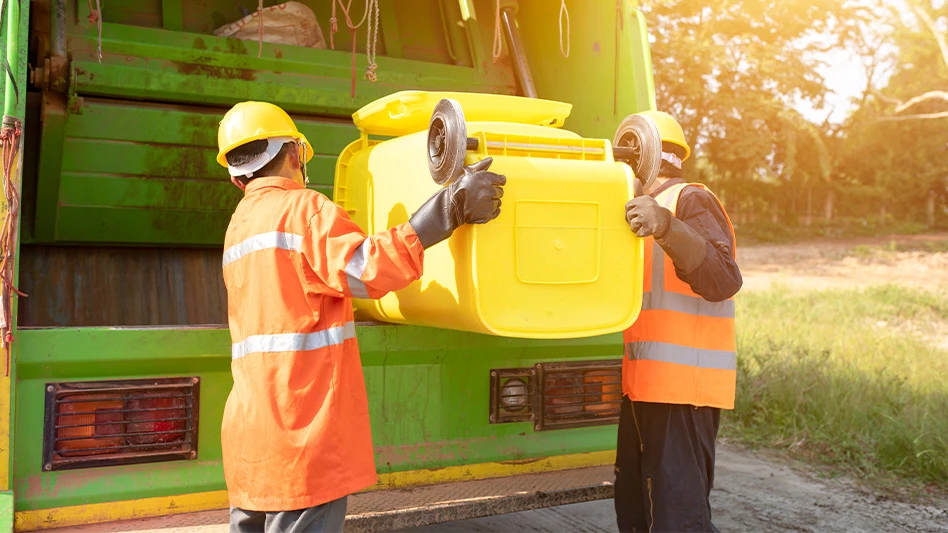
When Sarasota launched its single-stream recycling program last April, about 15,000 carts were distributed to residential customers, purchased in part with funds from a grant the city received from The Recycling Partnership, which is based in Falls Church, Virginia. Previously, recyclables had to be separated and placed into two smaller bins. The new carts include a lid to keep materials from escaping and getting into storm drains and local waterways as well as wheels so they can be easily rolled to the curb.

Kessler Consulting Inc. (KCI), Tampa, Florida, had performed a recycling composition study for the city in January, pulling representative samples from each of the city’s collection vehicles for one week and then hand sorting them into 33 categories representing major types of recyclables and nonrecyclable contamination. The study found that about 85 percent of the material was correctly placed in the residential recycling carts. According to KCI, the following is a breakdown of the city’s recycling stream:
- mixed paper – 24 percent;
- glass containers – 20.4 percent;
- contamination – 16.6 percent;
- corrugated – 13.5 percent;
- plastic containers – 11.1 percent;
- newspaper – 10.2 percent; and
- metal containers – 3.7 percent.
About 16.6 percent of the materials in the stream should not have been placed in the recycling carts, KCI states. Some of the nonrecyclable items identified included paper towels, plastic utensils and straws, plastic bags, clothing, construction debris, food waste, cat litter, diapers, scrap metal, hoses, electronics and full bags of garbage.
“Our residents are doing a great job with recycling, but our goal will always be to have zero contamination,” says Todd Kucharski, public works general manager for the city of Sarasota. “We’ll use the data from the study to refine our efforts to educate the public on the proper ways to recycle, and we look forward to conducting this same audit in the near future to see how we’ve improved as a community.”
Latest from Waste Today
- Vermeer announces plan to build new facility in Des Moines metro area
- Buffalo Biodiesel shares updates on Part 360 application to DEC, Tonawanda facility progress
- Capstar Disposal expands roll off dumpster rental services
- Supreme Court strikes down IEEPA tariffs
- Casella details facility closures, expansion efforts
- Zero harm: Building a SIF prevention program for waste and recycling operations
- Casella posts a loss in Q4 2025
- McNeilus names Haaker Equipment first Dealer Partner of the Year