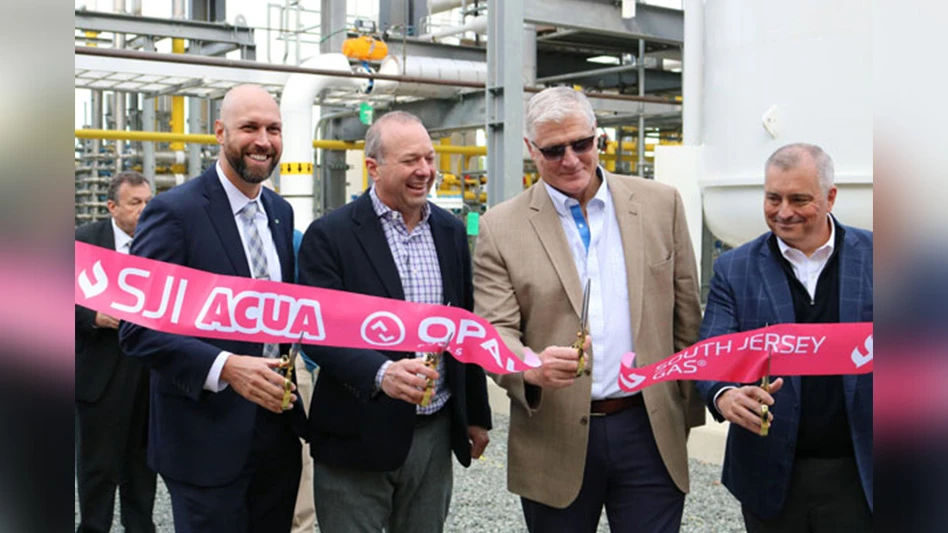
Photo courtesy of South Jersey Industries
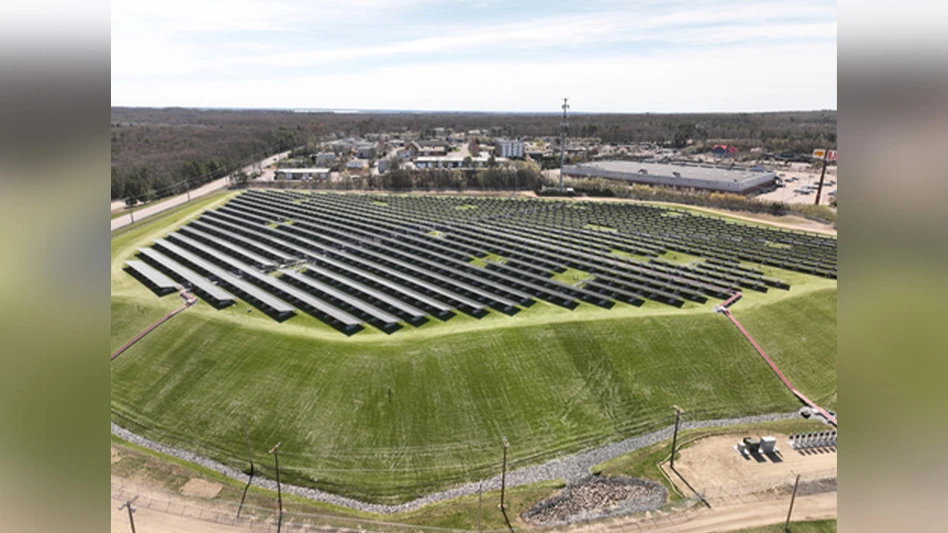
South Jersey Industries (SJI) and Opal Fuels have cut the ribbon on their Atlantic County Utilities Authority (ACUA) renewable natural gas (RNG) facility in Egg Harbor Township, New Jersey. The event was attended by local and state elected officials and company leadership.
“We are thrilled to cut the ribbon on this project, which signifies another milestone for SJI,” SJI Renewable Energy Ventures President Chet Benham says. “This project underscores our commitment to innovation and continuing efforts in renewable energy solutions.”
In early October, the facility achieved commercial operation. The project represents the first collaboration between Opal Fuels, based in White Plains, New York, and SJI, based in Folsom, New Jersey.
RELATED: New Jersey RNG facility begins commercial operation
“ACUA has consistently demonstrated its commitment to exploring and implementing technologies that transform waste into a resource and improve our environment,” ACUA President Matthew DeNafo says. “This project embodies that commitment, and we’re happy to celebrate its opening alongside our wonderful partners Opal and SJI.”
The ACUA plant will capture and process landfill gas into RNG, which is planned to be used as transportation fuel and directly injected into the pipeline system of South Jersey Gas, a subsidiary of SJI.
The facility is anticipated to have a nameplate capacity of 2,500 standard cubic feet per minute (SCFM) of landfill gas and is expected to produce more than 650,000 million British thermal units (MMBtu) per year of RNG. The process will reduce the volume of methane gas combusted at the facility, resulting in a reduction in on-site emissions.
Once operational, the RNG produced at the ACUA’s solid waste landfill is also expected to reduce methane emissions from the landfill and avoid over 346,000 metric tons of carbon dioxide per year.
“The opening of this facility marks an important milestone in Opal Fuels’ mission of turning waste into clean, domestic energy,” Opal Fuels co-CEO Adam Comora says. “This project reduces emissions, improves local air quality, creates jobs and strengthens American energy independence. As we drive forward with a focus on strategic growth and operational excellence, this project serves as an example of how landfills can benefit from producing RNG by generating financial value, cutting methane emissions and displacing diesel to decarbonize transportation.”
Latest from Waste Today
- Vermeer announces plan to build new facility in Des Moines metro area
- Buffalo Biodiesel shares updates on Part 360 application to DEC, Tonawanda facility progress
- Capstar Disposal expands roll off dumpster rental services
- Supreme Court strikes down IEEPA tariffs
- Casella details facility closures, expansion efforts
- Zero harm: Building a SIF prevention program for waste and recycling operations
- Casella posts a loss in Q4 2025
- McNeilus names Haaker Equipment first Dealer Partner of the Year