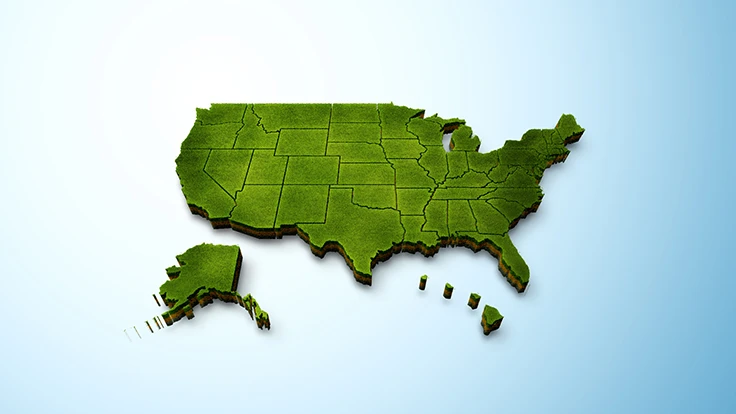
The Sustainable Development Solutions Network (SDSN) has released the first U.S. Cities SDG Index, ranking the 100 most populous U.S. cities based on their performance on the Sustainable Development Goals (SDGs).
Using metropolitan statistical areas (MSAs), SDSN says results show that all U.S. cities, even those at the top of the index, have far to go to achieve the SDGs. The SDGs, an effort by the United Nations Development Programme (UNDP), a development agency of the United Nations, are a universal call to action to end poverty, protect the planet and ensure that all people enjoy peace and prosperity.
The U.S. Cities SDG Index uses 49 indicators from 16 of the 17 SDGs, goals that were agreed upon by all countries at the United Nations in September 2015. The Index provides a more holistic and comprehensive assessment of sustainable development challenges faced by U.S. cities than available through other metrics.
The top rankings from the U.S. Cities SDG Index are as follows: The San Jose-Sunnyvale-Santa Clara metro region in California wins the top spot, with an overall index score of 61.04. This means that the San Jose MSA is 61.04 percent of the way to achieving the SDGs, according to the measures used in this Index. The San Jose MSA also is in the top 10 for 10 of the 16 goals.
Provo-Orem in Utah secured second ranking, with an Index score of 58.05, followed by Seattle-Tacoma-Bellevue in Washington and San Francisco-Oakland-Hayward in California.
Detroit, Cleveland and Baton Rouge, Louisiana, round out the bottom of the list.
SDSN says it focused on U.S. cities as they “are at a critical juncture.”
“America’s cities, home to 62.7 percent of the domestic population, are experiencing enormous challenges. The economy is in a state of rapid transformation as the result of new information technologies. Income and job inequalities are widening. Many cities are experiencing dangerous levels of water scarcity and drought, food insecurity and persistent poverty, underemployment, health disparities, flooding due to sea-level rise, and persistent levels of crime and violence,” the SDSN says. “The SDGs are an opportunity to address many of America’s challenges while building on America’s great reservoirs of dynamism and talent.”
Jeff Sachs, director of the SDSN, and coauthor of the U.S. Cities SDG Index, adds, “We hope that the SDGs, suitably adapted to America’s context, will become America’s Goals for 2030. The SDGs present not only a set of challenges, but a tremendous opportunity to dedicate the skills of this generation to a great economic and social renewal and to build the new American economy of the 21st century. We count on the new U.S. Cities SDG Index to be a help in this national endeavor. By measuring the current state of the SDGs across America’s metropolitan areas, we create an accurate starting line for our race to 2030 and a smart, fair, and sustainable future. No doubt there will be many areas of improvement to the U.S. Cities SDG Index in the years ahead. Yet time is short and 2030 is near.”
The Global SDG Index established the foundation for the first unofficial U.S. Cities SDG Index, published by the SDSN. In 2016, the Global Index ranked the U.S. 25th among all countries pursuing the SDGs. In 2017, the U.S. was ranked 42nd as a result of the inclusion of additional indicators that assess international spillover effects such as carbon dioxide emissions and tax evasion, according to the SDSN. It was these low scores that, in part, prompted the creation of this U.S. Cities SDG Index, so that we could better understand America’s specific challenges and cross-country variation.
SDSN has been operating since 2012 under the auspices of the United Natoin Secretary-General. SDSN mobilizes global scientific and technological expertise to promote practical solutions for sustainable development, including the implementation of the SDGs and the Paris Climate Agreement. SDSN aims to accelerate joint learning and promote integrated approaches that address the interconnected economic, social and environmental challenges confronting the world. SDSN works closely with United Nations agencies, multilateral financing institutions, the private sector and civil society.
Using metropolitan statistical areas (MSAs), SDSN says results show that all U.S. cities, even those at the top of the index, have far to go to achieve the SDGs. The SDGs, an effort by the United Nations Development Programme (UNDP), a development agency of the United Nations, are a universal call to action to end poverty, protect the planet and ensure that all people enjoy peace and prosperity.
The U.S. Cities SDG Index uses 49 indicators from 16 of the 17 SDGs, goals that were agreed upon by all countries at the United Nations in September 2015. The Index provides a more holistic and comprehensive assessment of sustainable development challenges faced by U.S. cities than available through other metrics.
The top rankings from the U.S. Cities SDG Index are as follows: The San Jose-Sunnyvale-Santa Clara metro region in California wins the top spot, with an overall index score of 61.04. This means that the San Jose MSA is 61.04 percent of the way to achieving the SDGs, according to the measures used in this Index. The San Jose MSA also is in the top 10 for 10 of the 16 goals.
Provo-Orem in Utah secured second ranking, with an Index score of 58.05, followed by Seattle-Tacoma-Bellevue in Washington and San Francisco-Oakland-Hayward in California.
Detroit, Cleveland and Baton Rouge, Louisiana, round out the bottom of the list.
SDSN says it focused on U.S. cities as they “are at a critical juncture.”
“America’s cities, home to 62.7 percent of the domestic population, are experiencing enormous challenges. The economy is in a state of rapid transformation as the result of new information technologies. Income and job inequalities are widening. Many cities are experiencing dangerous levels of water scarcity and drought, food insecurity and persistent poverty, underemployment, health disparities, flooding due to sea-level rise, and persistent levels of crime and violence,” the SDSN says. “The SDGs are an opportunity to address many of America’s challenges while building on America’s great reservoirs of dynamism and talent.”
Jeff Sachs, director of the SDSN, and coauthor of the U.S. Cities SDG Index, adds, “We hope that the SDGs, suitably adapted to America’s context, will become America’s Goals for 2030. The SDGs present not only a set of challenges, but a tremendous opportunity to dedicate the skills of this generation to a great economic and social renewal and to build the new American economy of the 21st century. We count on the new U.S. Cities SDG Index to be a help in this national endeavor. By measuring the current state of the SDGs across America’s metropolitan areas, we create an accurate starting line for our race to 2030 and a smart, fair, and sustainable future. No doubt there will be many areas of improvement to the U.S. Cities SDG Index in the years ahead. Yet time is short and 2030 is near.”
The Global SDG Index established the foundation for the first unofficial U.S. Cities SDG Index, published by the SDSN. In 2016, the Global Index ranked the U.S. 25th among all countries pursuing the SDGs. In 2017, the U.S. was ranked 42nd as a result of the inclusion of additional indicators that assess international spillover effects such as carbon dioxide emissions and tax evasion, according to the SDSN. It was these low scores that, in part, prompted the creation of this U.S. Cities SDG Index, so that we could better understand America’s specific challenges and cross-country variation.
SDSN has been operating since 2012 under the auspices of the United Natoin Secretary-General. SDSN mobilizes global scientific and technological expertise to promote practical solutions for sustainable development, including the implementation of the SDGs and the Paris Climate Agreement. SDSN aims to accelerate joint learning and promote integrated approaches that address the interconnected economic, social and environmental challenges confronting the world. SDSN works closely with United Nations agencies, multilateral financing institutions, the private sector and civil society.
Latest from Waste Today
- Vecoplan to present modular solutions at IFAT 2026
- Terex Ecotec appoints Bradley Equipment as Texas distributor
- My Green Michigan expands depackaging capacity
- Washington selects Circular Action Alliance as PRO
- Ten-8 Industrial opens new central Florida service center
- Triumvirate Environmental acquires Environmental Waste Minimization
- Official NYC Bin availability expands ahead of deadline
- US Food Waste Pact’s 2025 Impact Report shows decrease in food waste