The session was titled “The Changing Role of Disposal Facilities: The Tail is Now Wagging the Dog," and was part of the Landfill Symposium.
Atlas Organics and Greenville County partnered to create a composting site at the county’s Twin Chimney Landfill. The site is a processing point for the county’s yard waste. Support also came from the nonprofit Don’t Waste Food SC – all of which are SWANA members. Harrison referred to SWANA as the “glue that brings us all together.
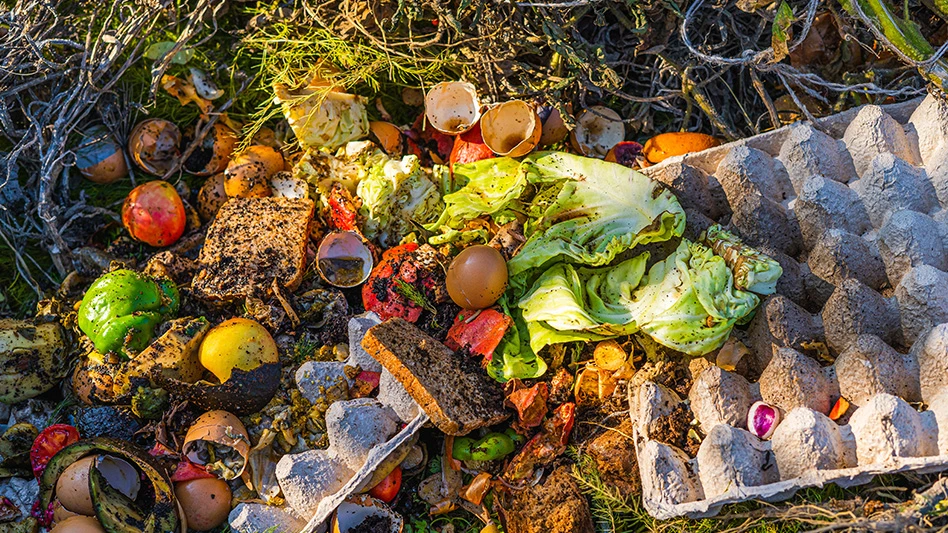
She said the county has a 1,000-acre landfill and noted that as in the case of most landfills, not all of that land is used for landfilling materials. The county also knew that if the project didn’t work out, then they could dispose of the material in the landfill. But the opposite has occurred and Atlas is even interested in expanding its current site. Local businesses, including Michelin’s corporate office and grocery stores have participated in a collection program with Atlas for their food waste. Atlas picks up the containers and replaces them with clean containers each collection. Harrison showed pictures of the watermelon waste that Atlas collected and explained that on its own it is too wet to create compost. A bulking agent needs added. The county has a grinding program and grinds the yard waste and construction and demolition materials which are added to the food waste.
The material is aerated and in 40 days it is “gorgeous black compost,” described Harrison.
In less than a year of the program, Atlas has grown from six to 14 employees and has nearly doubled the amount of tons it is processing.
Manny Hernandez, senior project manager for Long Beach, California-based SCS Engineers discussed some of the key characters and issues that can come up in any kind of waste project. He used Palm Beach County, Florida, as an example, referencing a landfill expansion project in the western part of the county. In addition to the normal issues that were necessary to consider, including wetlands, how high to build and traffic, the Loxahatchee Wildlife Refuge bordered the landfill.
Zoning ended up killing the project, he said.
Hernandez said the two needed to develop a project are “a PE and a PW.” In his case, PE did not stand for Professional Engineer, it stood for Political Engineer, and PW stood for political will.
He said he found solid advice from the book “Insiders Guide to Environmental Negotiation” by Dale Gorczynski.
One piece of advice it gave was that “you can’t tell the players without the program.” He explainied that when you go to a play they give you a playbill that tells you who is playing what role. In a public project, he said, it is important to understand who the players are. He said to get an organizational chart and know who to deal with and whom they are reporting to.
There are also key people in any project, including engineers, politicians, bureaucrats, industrialists, environmental activists, the people, the media, and lawyers and lobbyists.
He quoted the book saying, “Engineers are a pain to deal with” they speak a language that 99 percent of the human race doesn’t understand.”
People he said mostly care about anything that will affect directly and personally. The media, he said, have no filter now, especially with social media. Layers and lobbyists, he said will work for whomever pays them. Bridgebuilders can bring these parties to an understanding.
SWANAPalooza was March 29-30 at the Reno-Sparks Convention Center in Reno.
Latest from Waste Today
- Waste Pro files brief supporting pause of FMCSA CDL eligibility rule
- New Way Trucks expands US network with Joe Johnson Equipment
- Tire Industry Project publishes end-of-life tire management guide
- Vecoplan to present modular solutions at IFAT 2026
- Terex Ecotec appoints Bradley Equipment as Texas distributor
- My Green Michigan expands depackaging capacity
- Washington selects Circular Action Alliance as PRO
- Ten-8 Industrial opens new central Florida service center