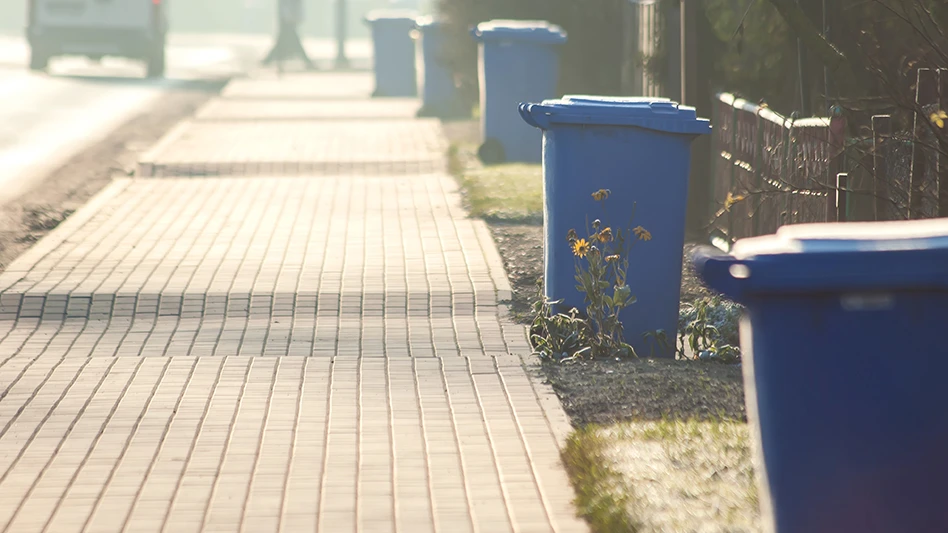
Aleksej | stock.adobe.com
The city of Tacoma, Washington, has launched a two-year pilot project in partnership with Prairie Robotics, Regina, Saskatchewan, to help reduce contamination in the residential recycling stream.
Funded by a $1.8 million grant from the Environmental Protection Agency’s (EPA’s) Recycling Education and Outreach Grant Program, the project aims to educate residents about what can and cannot be recycled in Tacoma’s curbside program.
The pilot will use smart camera technology to detect contamination in residential recycling as it is collected. When contamination is identified, residents will receive educational postcards highlighting which items are not accepted in Tacoma’s curbside recycling system.
RELATED: Get smart
“Contamination impacts how we can deliver services and the cost of those services for all residents,” Tacoma Solid Waste Management Division Manager Lewis Griffith says. “Educating residents on what is accepted in our curbside program and reducing contamination can have positive impacts on the program for all residents of Tacoma.”
Prairie Robotics, a Canadian software development and engineering firm, was selected to support the project. The company’s artificial intelligence- (AI-) powered platform is already in use with waste providers and municipalities across the U.S. and Canada, including Waste Connections, GFL and the cities of Greensboro, North Carolina, and East Lansing, Michigan.
“We are thrilled to partner with the city of Tacoma on this project and believe that our platform can help to reduce contamination in recycling across Tacoma,” Prairie Robotics CEO Sam Dietrich says. “We look forward to continuing to work with the city as this pilot evolves to ensure that our services meet the need of Tacoma residents.”
The pilot will roll out to residential recycling routes in phases over the next year. Residents in selected areas will begin receiving postcards starting this month. The city says no fees or penalties will be issued for contamination identified during the pilot. The project will continue through the life of the grant and is expected to be reviewed in June 2027.
Latest from Waste Today
- Wisconsin Senate advances $125M PFAS cleanup funding after years of delay
- New Jersey highlights collection initiative to destroy PFAS firefighting foams
- Recycle Coach partners with Bartec Municipal Technologies
- CPUC conditionally approves RNG procurement contract for Anaergia’s SoCal Biomethane facility
- EPA proposes abandoned tire cleanup plan with focus on energy recovery
- Global Recycling Foundation recognizes Recycling Heroes
- Equipment finance index takes dip in March
- Oregon DEQ issues enforcement order, $3M civil penalty to Valley Landfills