Photo courtesy of Mainspring Energy
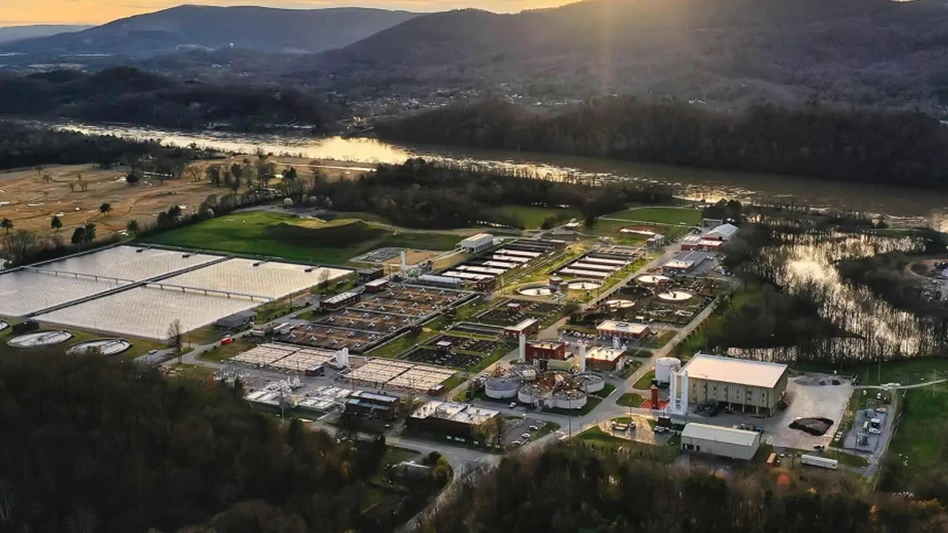
The Moccasin Bend Environmental Campus (MBEC) in Chattanooga, Tennessee, launched a project to generate electricity from wastewater methane that is projected to significantly reduce its nearly $300,000 monthly energy costs.
The firm is partnering with Mainspring Energy, based in Menlo Park, California, to install a system that will allow MBEC most of its electricity on-site, offsetting about one-third of its electric bill and eliminate routine methane flaring. MBEC says generating power at the campus will also strengthen grid reliability by reducing dependence on outside electricity during periods of high demand or disruption.
“This project changes how we think about wastewater treatment,” MBEC Administrator Mark Heinzer says. “Instead of treating methane as waste, we’re using it to power essential operations, strengthen reliability and lower long-term energy costs for the community we serve.”
MBEC says Mainspring Energy will install six linear generators in 2026 that will produce an initial 1.5 megawatts of electricity using methane captured during wastewater treatment processes. Six additional generators are planned following campus upgrades, which will double the total capacity to three megawatts.
MBEC has a wastewater treatment capacity of 230 million gallons per day and processes an average of 65 million gallons daily, serving more than 400,000 residents across six counties and two states.
According to Mainspring Energy, the installation will rank among the largest municipal biogas-to-power projects in the southeast once fully operational. The project represents a step toward stabilizing long-term energy costs for ratepayers while advancing Chattanooga’s broader sustainability goals.
Mainspring adds that the generators operate using a low-emission engine capable of running on biogas, natural gas, hydrogen or ammonia, allowing MBEC to adapt to evolving fuel sources while maintaining continuous power generation and reducing greenhouse gas emissions.
“We’re proud to partner with Chattanooga on a project that reflects forward-looking leadership and a practical commitment to strengthening critical infrastructure,” says Adam Simpson, chief commercial officer and co-founder of Mainspring. “They were seeking a solution that could be deployed quickly, operate on multiple fuel types at low emissions, and provide dependable on-site power to convert waste into a productive energy asset. We are able to deliver all of that and more, and we look forward to continuing to expand this project with them over time.”
Latest from Waste Today
- Oregon lawmakers pass battery recycling bill
- Benton County Commissioners reverse approval of Coffin Butte landfill expansion
- VLS Environmental Solutions acquires IDR Environmental Services
- WM opens upgraded recycling facility in Southern California
- City of Providence to receive new collection carts through $7.4M investment
- CAA has submitted updated REM program plan in Oregon
- BTR announces senior director of sales
- New York receives $2.36M investment in waste tire reuse, recycling