Photo courtesy of Kipas Textiles
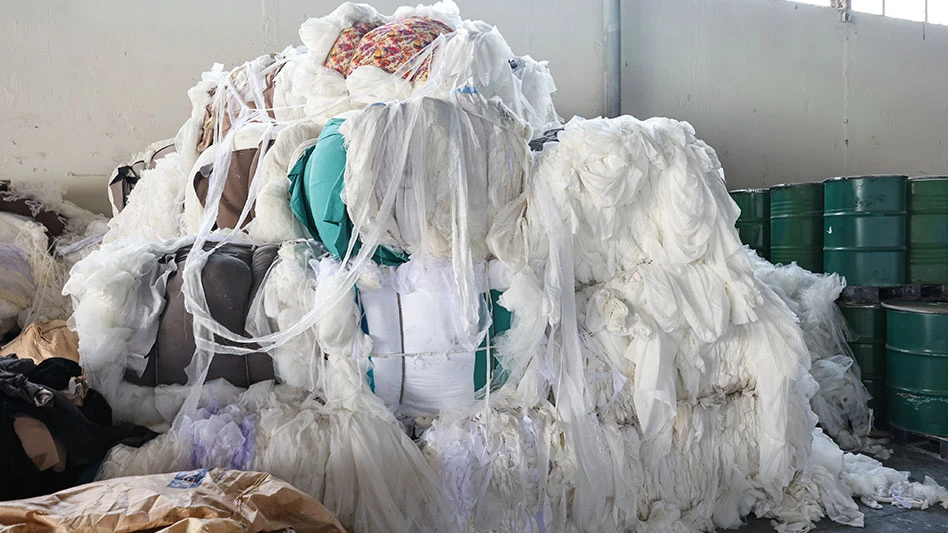
Kipas Textiles, an integrated textile manufacturer headquartered in Turkey, has launched fibR-e, a new recycling platform it says is designed to address the hurdles that have stopped polyester from becoming truly circular.
Of the millions of tons of polyester-based clothing the fashion industry produces annually, less than 1 percent is recycled back into new garments, Kipas says. Most ends up in landfills or incinerators.
However, regulations across Europe and other regions will require brands to take responsibility for the full life cycle of their products, and consumers are asking harder questions about sustainability.
Kipas says fibR-e will give brands a credible way to address sustainability by building on a multiyear partnership between Kipas and Meltem Kimya, a Turkish company that will provide the molecular recycling expertise that underpins the fibR-e platform.
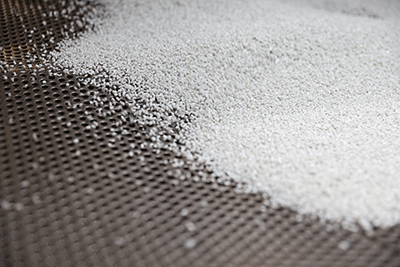
Meltem Kimya’s advanced technology can convert postconsumer garments containing 70 percent or more polyester, including polyester-elastane blends and other polyester-based mixed-fiber blends. Items with trim still attached and mixed-color feedstocks are converted into Global Recycled Standard- (GRS-) certified rTex chips, which Kipas Textiles turns into filament yarns and staple fibers that can be used to make new garments.
Through the fibR-E platform, accessories are removed during processing rather than through manual sorting, reducing labor and bottlenecks, Kipas says. The process decolorizes blended fabrics using a patented molecular recycling technology, known as glycolysis, developed by Meltem Kimya that breaks polyester down into its building blocks and rebuilds it without creating microplastics, allowing repeated recycling without loss of quality, the companies say.
As a global yarn and fabric producer, Kipas says it will channel fibR-e materials directly into its own supply chain, enabling bulk production at competitive pricing. The outputs are traceable, performance-tested and designed to meet commercial quality standards while helping brands reduce virgin material use and prepare for stricter regulations.
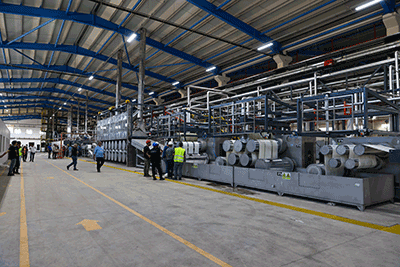
Early analysis shows that producing polyester entirely from textile waste through fibR-e cuts emissions by nearly 74 percent compared with virgin production, according to Kipas Textiles.
"Recycling has barely scratched the surface of the polyester problem," says Halit Gümüser, CEO of Kipas Textiles. "With fibR-e, we can take real postconsumer waste in all its complexity and return it to the market as certified, high-quality filament yarns and staple fibers. This is how the industry moves from linear to circular, not through pilots but through commercial scale."
Latest from Waste Today
- Fleetio launches AI capability to accelerate fleet maintenance approvals
- Recycle Ann Arbor extends drop-off station operating hours
- Sybilion seeks to help manufacturers confidently address volatility
- Ecowaste Solutions partners with city of Trinity, Texas
- Bristal Hauling acquires G&R Garbage Disposal
- Baltimore trash collection expected to slow as WTE facility closes for maintenance
- Landfill Insights | Connecting the dots: Policy to practice
- FCC Environmental Services awarded collection contract in Florida