Siting, liner systems, and leachate management are three of the most important factors in designing a landfill effectively.
One of the most critical aspects of landfill design is site selection. Landfills shouldn’t be located near certain ecosystems, water sources, or residential areas. When selecting a landfill site, topography, soil type, hydrogeology, climate, and availability of transportation infrastructure should all be considered.
Topography is an essential factor when considering the site for a landfill. Landfills should be located on a flat terrain that is not prone to flooding or erosion, which could lead to soil erosion, the exposure of waste, and leachate contamination. Additionally, landfills should not be situated in areas with lots of seismic activity or geological instability because these conditions could cause the landfill to collapse.
Landfills should ideally be located in an area with sufficient rainfall to promote the degradation of the waste, but not in an area with too much precipitation that could cause the landfill to become saturated and lead to a higher risk of leachate contamination.
Soil type is also important in landfill design. It can affect the strength and stability of the landfill. A landfill site should ideally have a deep layer of impermeable clay or rock that can act as a natural barrier to prevent leachate from penetrating the groundwater.
Landfill liners are essential to prevent the leakage of leachate. Leachate contains various pollutants—including heavy metals, organic compounds, and pathogens—that can harm the environment and public health if they enter the groundwater.
A liner system is typically composed of several layers of different materials: a geomembrane, which serves as the primary barrier to prevent leachate from penetrating the soil; a geotextile, a permeable fabric that helps to prevent punctures in the geomembrane and provides additional protection against leaks; and a drainage layer, which consists of a network of pipes or a layer of gravel that collects and removes the leachate from the landfill. The drainage layer also helps to reduce the buildup of pressure within the landfill, which can lead to liner failure.
The last layer is the underlying soil, which must be compacted and free of any large voids or cracks that could allow leachate to flow through.
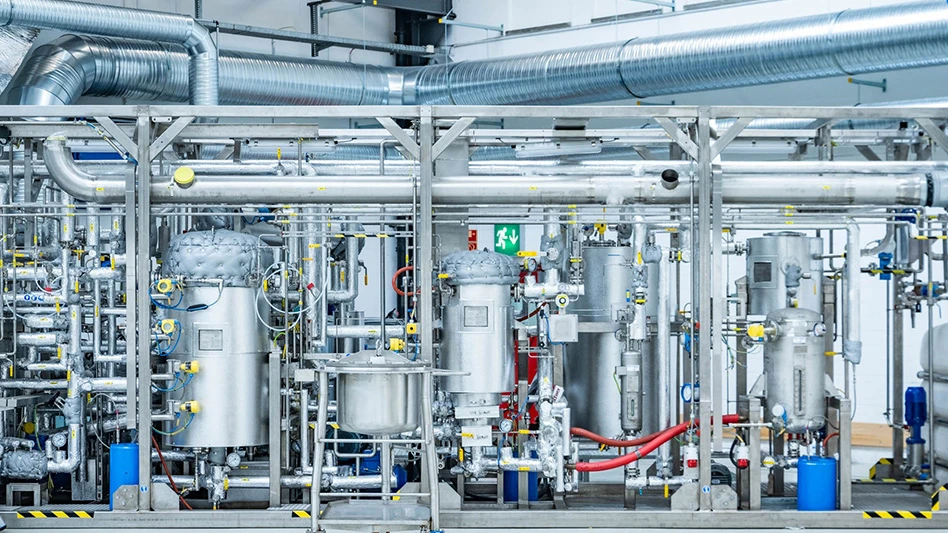
Leachate management is another critical aspect of landfill design. The drainage layer within the landfill liner system collects leachate, which is then transported to a leachate collection sump. The leachate collection sump is a storage tank that temporarily holds the leachate before it is transported to a treatment facility. The leachate must be treated to remove any pollutants, like heavy metals, organic compounds and pathogens, before it is discharged into the environment.
Treatment options for leachate include physical, chemical, and biological methods. Physical methods include sedimentation and filtration, which remove solids and suspended particles from the leachate. Chemical methods include coagulation and oxidation to remove pollutants from the leachate using chemicals. Biological methods include aerobic and anaerobic treatment, which use microorganisms to degrade organic compounds in the leachate.
Latest from Waste Today
- California collection program diverts 12,000 tons of organics in first year
- Oregon lawmakers pass battery recycling bill
- Benton County Commissioners reverse approval of Coffin Butte landfill expansion
- VLS Environmental Solutions acquires IDR Environmental Services
- Tennessee wastewater treatment plant launches conversion project
- WM opens upgraded recycling facility in Southern California
- City of Providence to receive new collection carts through $7.4M investment
- CAA has submitted updated REM program plan in Oregon