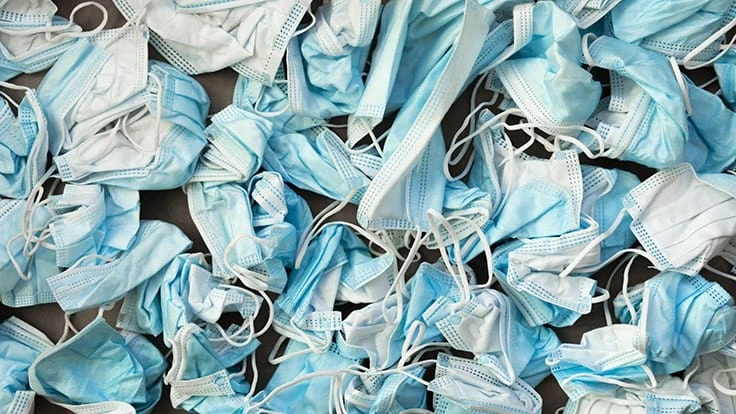
Photo from Recycling Today photo archive
The World Health Organization (WHO) says tens of thousands of tons of extra medical waste from the response to the COVID-19 pandemic has put tremendous strain on health care waste management systems globally. The report, titled "Global analysis of health care waste in the context of COVID-19,” says the pandemic “threatens human and environmental health and exposes a dire need to improve waste management practices.”
According to the report, WHO estimates 87,000 metric tons of personal protective equipment (PPE) was procured between March 2020 and November 2021 and shipped to support countries’ COVID-19 response needs. Most of this equipment is expected to have ended up as waste.
More than 140 million test kits, with a potential to generate 2,600 metric tons of noninfectious waste and 731,000 liters of chemical waste, have been shipped. More than 8 billion doses of the COVID-19 vaccine were administered globally, producing 144,000 tons of additional waste in the form of syringes, needles and safety boxes.
“COVID-19 has forced the world to reckon with the gaps and neglected aspects of the waste stream and how we produce, use and discard of our health care resources from cradle to grave,” says Dr. Maria Neira, director of the environment, climate change and health at WHO. “Significant change at all levels, from the global to the hospital floor, in how we manage the health care waste stream, is a basic requirement of climate-smart health care systems.”
The report lays out a set of recommendations for integrating better, safer and environmentally sustainable waste practices into the current COVID-19 response and future pandemic preparedness efforts. Some recommendations include using eco-friendly packaging and shipping, safe and reusable PPE and recyclable or biodegradable materials.
“A systemic change in how health care manages its waste would include greater and systematic scrutiny and better procurement practices,” says Dr. Anne Woolridge, chair of the health care waste working group of the International Solid Waste Association.
WHO notes that this report provides an initial indication of the scale of the COVID-19 waste problem. It does not account for any COVID-19 commodities procured outside of the initiative nor waste generated by the public like disposable medical masks.