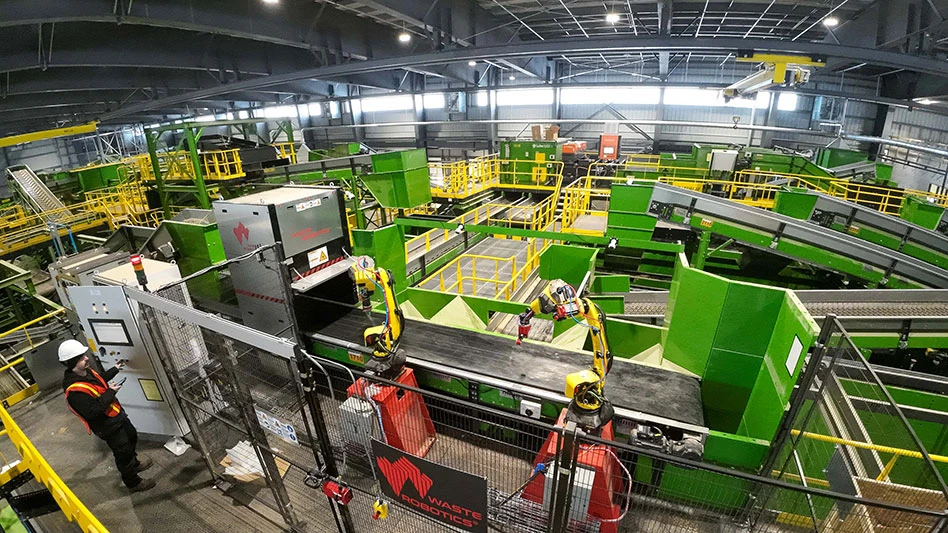
Photo courtesy of Circular Materials
WM, headquartered in Houston, has opened two new recycling facilities serving Cambridge and the Greater Napanee areas in Ontario. The facilities support the new producer-funded, provincewide recycling program that became available to residents at the start of this year.
RELATED: Ontario EPR system nearer to implementation
“These facilities reflect the strong partnerships driving Ontario’s transition to extended producer responsibility and the momentum building across the province’s recycling system,” says Allen Langdon, CEO, Circular Materials, the Common Collection System administrator and nonprofit organization responsible for managing Ontario’s new extended producer responsibility- (ERP-) funded residential recycling system. “Collaboration with WM, along with producers and other recycling partners, is essential to strengthening our systems and supporting a more circular future for all Ontarians.”
“Investing in Ontario’s recycling infrastructure allows WM to support the province’s recycling system today and over the long term,” says Tracy Black, president, WM Canada.
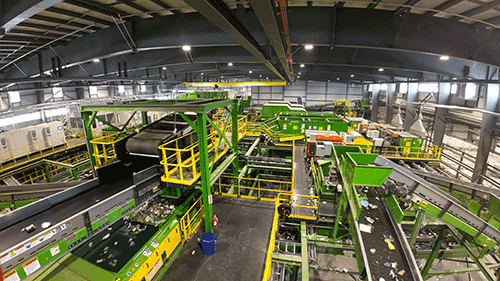
With the capacity to support the processing of approximately 30 percent of Ontario’s total blue box volumes, these facilities play a critical role in helping to optimize the province’s new recycling system, according to a news release from Circular Materials, which is based in Toronto. These new sites will help streamline processes, particularly as Circular Materials rolls out a new unified material list across the province that expands the number of items that can be recycled. Now Ontarians, no matter where they live in the province, can recycle the same items, including hot and cold beverage cups (coffee cups), black plastic containers, frozen juice containers, ice cream tubs, toothpaste tubes, deodorant and more.
Each site, capable of handling 160,000 metric tons, has created approximately 40 local jobs, for a total of more than 80 positions across both facilities, Circular Materials says. Each site is equipped with advanced material separation technologies, including 19 optical sorters, artificial intelligence (AI) and robotics. These advancements help to streamline processes, increase accuracy and efficiency and enable a focus on innovation, safety and material quality that supports a more circular future, the organization adds.
Latest from Waste Today
- Wisconsin Senate advances $125M PFAS cleanup funding after years of delay
- New Jersey highlights collection initiative to destroy PFAS firefighting foams
- Recycle Coach partners with Bartec Municipal Technologies
- CPUC conditionally approves RNG procurement contract for Anaergia’s SoCal Biomethane facility
- EPA proposes abandoned tire cleanup plan with focus on energy recovery
- Global Recycling Foundation recognizes Recycling Heroes
- Equipment finance index takes dip in March
- Oregon DEQ issues enforcement order, $3M civil penalty to Valley Landfills