Louisville, Kentucky-based Yum! Brands, which owns the KFC, Taco Bell and Pizza Hut brands, has issued its "2017 Global Citizenship & Sustainability Report," in which it includes an update on its recycling efforts.
The restaurant company says it generates some 885,000 tons of discarded materials in its United States operations and that it diverted from landfills or incinerators approximately 25 percent of that quantity in 2017. The Yum! Brands corporate goal is for 50 percent diversion.
The company identifies 15 percent of its total discarded materials as consisting of old corrugated containers (OCC) and another 15 percent of other types of scrap paper.
Regarding packaging, Yum! Brands states there are opportunities and challenges. “It plays a vital role in reducing food waste by keeping food fresh, but excessive packaging contributes to nonfood and energy waste,” the company’s sustainability report authors write.
Yum! Brands indicates that KFC Australia “became the first quick-service restaurant to participate in a nationwide recycling initiative funded by the Australian Packaging Covenant,” and that globally “the market also recycles 98 percent of cardboard generated back-of-house in company-owned restaurants and the majority of cardboard from franchise restaurants.”
The company also says it has focused on the 10 percent of the stream consisting of cooking oil as a way to improve its diversion figure.
“At KFC restaurants in the United Kingdom and Ireland, 100 percent of cooking oil is reused as biodiesel to power our delivery vehicles,” the company states in its 2017 report. “In Australia, we partner with a third-party supplier who repurposes our used oil for biodiesel and animal feed. U.S. waste oil is also commonly reused,” the firm adds.
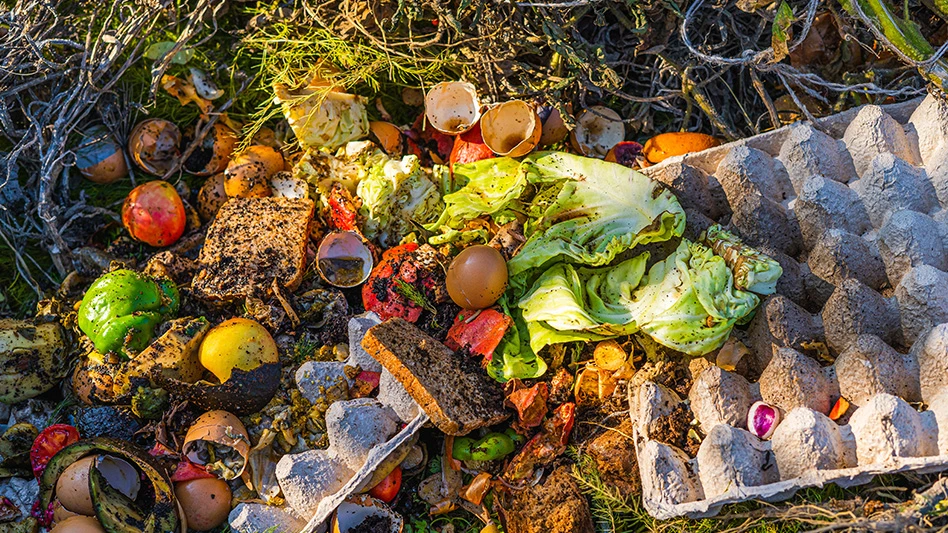
Yum! Brands indicates that with its leftover food, “We adhere to the U.S. Environmental Protection Agency's Food Recovery Hierarchy, which shows that there are much better places for leftover food than the landfill or even the compost bin.”
The company says for more than 25 years its Harvest program, in partnership with Food Donation Connection, has enabled it to donate surplus food from its restaurants to food banks, soup kitchens and other nonprofits.
“In 2017, the Yum! system avoided an estimated 14,500 metric tons of greenhouse gas emissions through food donation and recycling programs globally,” the company concludes.
Latest from Waste Today
- Interchange 360 to operate alternative collection program under Washington’s RRA
- Waste Pro files brief supporting pause of FMCSA CDL eligibility rule
- New Way Trucks expands US network with Joe Johnson Equipment
- Tire Industry Project publishes end-of-life tire management guide
- Vecoplan to present modular solutions at IFAT 2026
- Terex Ecotec appoints Bradley Equipment as Texas distributor
- My Green Michigan expands depackaging capacity
- Washington selects Circular Action Alliance as PRO