During my interview with Casella Waste Systems, Rutland, Vermont, for this issue’s cover story, marking the waste management company’s 50th anniversary, CEO John W. Casella and President Ned Coletta spoke at length about the increasing politicization of the solid waste industry.
This should come as no surprise to anyone reading—I don’t think there’s an area in any of our lives that hasn’t become increasingly politicized.
In Casella Waste Systems’ home base of the Northeast, where 25-30 percent of long-term landfill capacity has permanently closed in the last decade, according to Coletta, the politics have become quite complicated. While he’d prefer to see state legislators bring a long-term vision to handling waste and recycling—and put in place the necessary infrastructure, regulations and policy around it—many states are opting instead to export waste across state lines.
Coletta says his team is working with the public sector on a consistent basis to find safe, long-term, environmentally sound solutions for waste and recycling.
“Where this breaks down in the Northeast is we live in a consumable society, and someone can’t wave a magic wand today and have waste just go away,” Coletta says. “There needs to be a deeper partnership between our industry, regulators and politicians to really map towards the future of how we all work collaboratively to … take care of the waste that’s being generated but also look at the future for more and more technology and better and higher uses.”
As for the solution? Casella says he’d like to see states take more responsibility.
“I think the different states really need to take responsibility for the waste that’s generated within their populations, and instead of sticking their head in the sand and having policies that effectively have it shipped out of state, all states should be putting disposal capacity in place to meet the needs of their society,” he says.
Like many companies, Casella Waste Systems would love to see more sustainability and is continuing to move further toward the recycling processing side of the business, in effect cannibalizing itself by moving as much material out of disposal and into the recycling stream as possible through its materials management efforts. But that doesn’t mean there’s not an ongoing need for disposal capacity, Casella says, and today’s politicized atmosphere makes it nearly impossible to get through the process of building out that capacity.
Permitting on a recent facility expansion took nearly eight years, he says, and some of that had to do with social media.
“It used to be that we’d keep our head down, we’d stay out of the press and we would go through the process and get our permits,” Casella says. “Now, the minute a permit is filed for, you can have one person online one day who was upset … and then all of a sudden you’ve got 1,000 people [upset] on social media. So, it’s a very different world over the last, probably, 10 years or so.”
Read our cover story on Casella Waste Systems here.
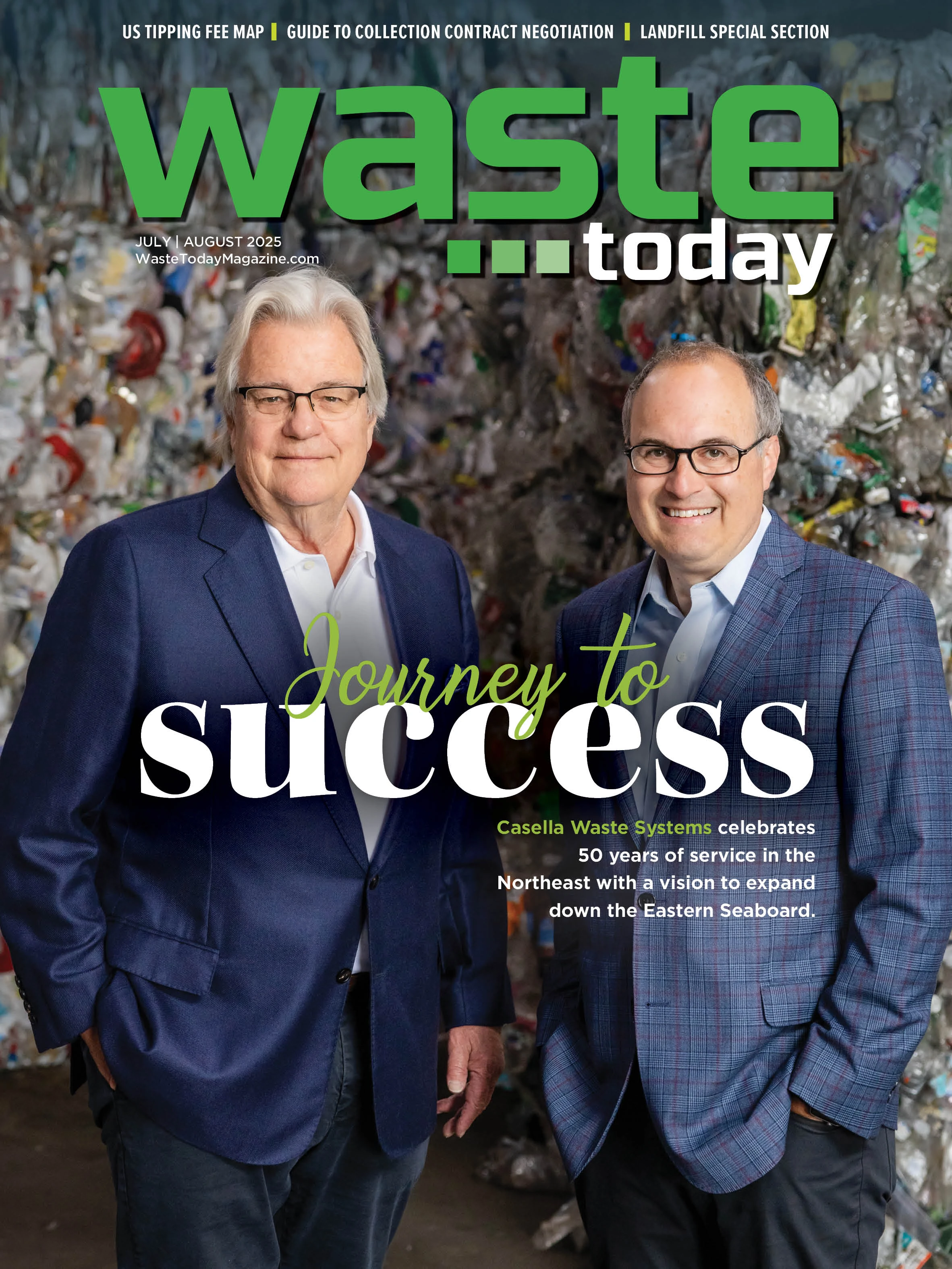
Explore the July/August 2025 Issue
Check out more from this issue and find your next story to read.
Latest from Waste Today
- Fleetio launches AI capability to accelerate fleet maintenance approvals
- Recycle Ann Arbor extends drop-off station operating hours
- Sybilion seeks to help manufacturers confidently address volatility
- Ecowaste Solutions partners with city of Trinity, Texas
- Bristal Hauling acquires G&R Garbage Disposal
- Baltimore trash collection expected to slow as WTE facility closes for maintenance
- Landfill Insights | Connecting the dots: Policy to practice
- FCC Environmental Services awarded collection contract in Florida